Mount Destruction
A tendency to frown on sculptural work of recent decades, in any generation, can result in the harshest of treatments for the largest. So it has been for the extraordinary sculpture of Paul Mount.

The final room of Historic England’s 2016 exhibition at Somerset House “Out There – Post War Public Art” ended with a mournful list of notable public sculpture from the second half of the 20th Century recorded as “Missing”. This was a rather down-beat end to a show that had started, in the first gallery, with the vigour, the sheer optimism and idealism of The Festival of Britain in 1951.
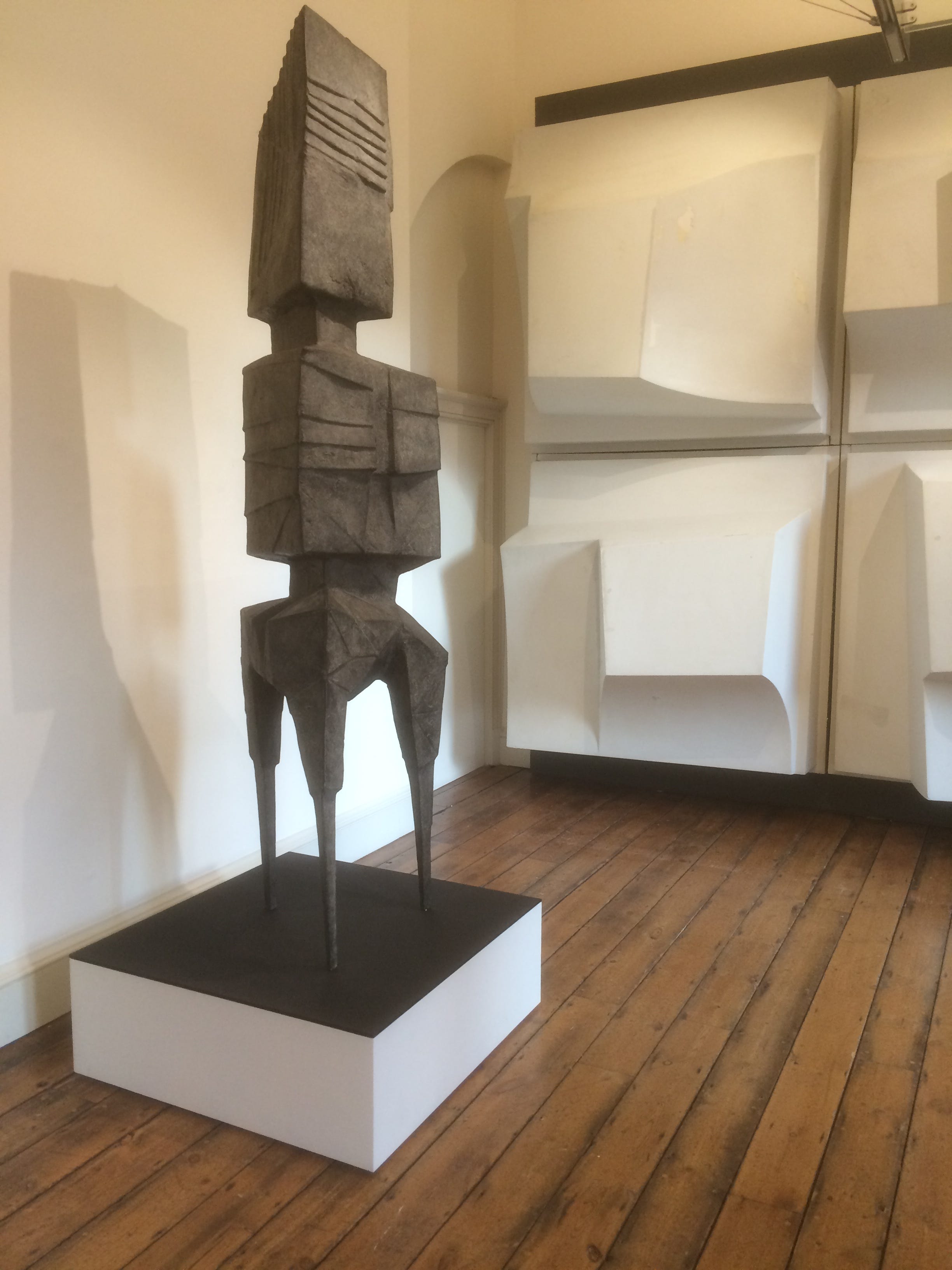
The 1950’s and 60’s saw a flourishing of abstract sculpture in Britain including the works of Henry Moore (1898-1986) and Barbara Hepworth (1903-75) and the slightly younger “Geometry of Fear” group1 including Lynn Chadwick (1914-2003). It was also an age where there was a drive to introduce sculpture to the new civic spaces in burgeoning high-rise housing estates and Garden City squares. The “Out There…” exhibition told this sculptural and architectural story well: the high hopes and ambition to restore Britain, to salve the country, stand-up and move-on from the war. And it then told of the unfortunate decline that associated idealism and sculpture seemed destined to endure.
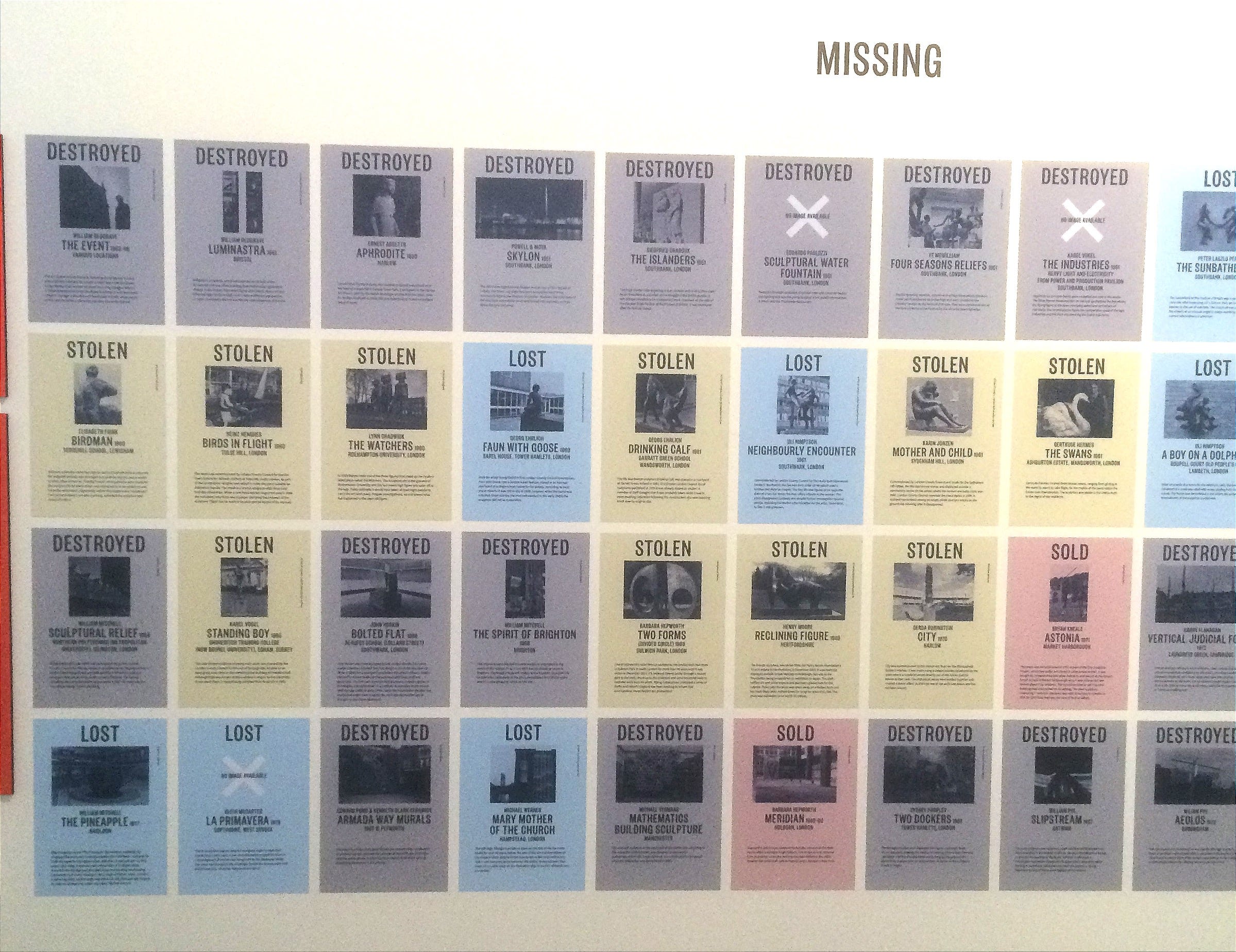
Some of these post war civic-space sculptures do survive of course (and some, such as the Henry Moore frieze high above 120 New Bond Street, go completely un-noticed) but it was shocking to read how many of these sculptures appeared on the mournful “Missing” list: whether Sold, Lost, Destroyed or Stolen.
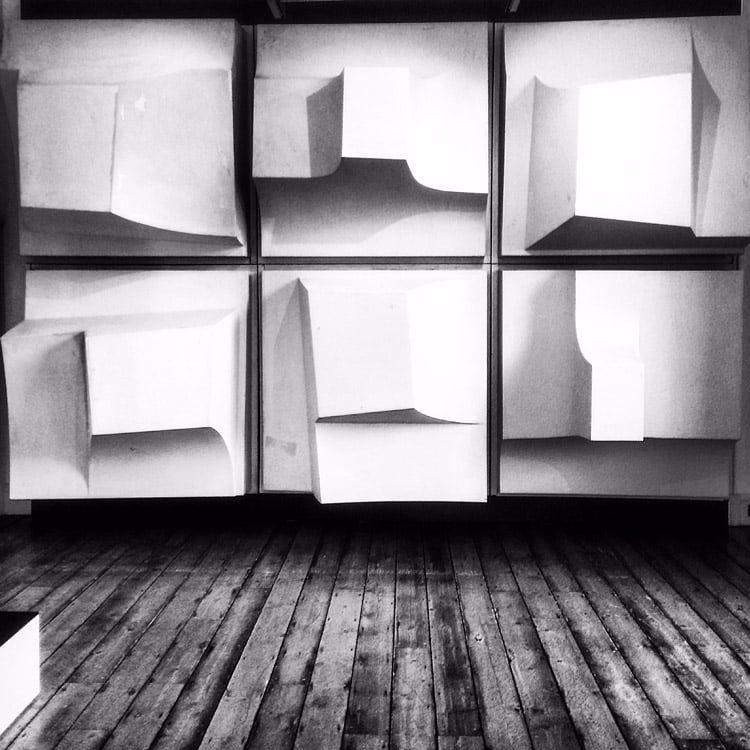
Happily, there was another list in that final room with the heading “Saved”: some sculptures had teetered on the edge of oblivion but had survived. One of them was vast. It was originally installed in Falmouth. A representative section of it filled an entire wall of the exhibition lobby. The gallery label briefly told its story:
Paul Mount
Fibreglass architectural relief from Leo’s Supermarket, 1984
Ponsharden, Falmouth, Saved by Nick Dobson
Paul Mount (1922- 2013) studied painting at the Royal College of Art during the Second World War, and in 1955 went to Nigeria to join the Borys group of architects (which included Maxwell Fry). As their design consultant he created sculpture, trade fairs, furniture and cladding, including a 180 metre-long wall for the Swiss embassy in Lagos. In 1962 he returned to England and set up a studio in Cornwall and worked closely with the architect John Crowther, for whom he designed architectural reliefs in concrete and fibreglass. Crowther was the architect of Leo’s (later a Co-op Pioneer) Supermarket in Falmouth in 1984.
The supermarket was bought in 2009 by Sainsbury’s, which wanted to refurbish and extend it. The panels were earmarked for removal. Designer and local resident Nick Dobson tried to have the building listed, but when this failed, Sainsbury’s allowed him take the fibreglass panels that were being skipped.
Nick saved 60, the number he could fit into his garden.
The remainder (approx. 160) now lie in landfill. There are five different types of panel, designed so they can be rotated to create an infinite number of layouts.
Nick is hoping that a new home can be found for them. If you have any suggestions please contact Historic England.
So that is exactly what I did.
Nick Dobson, a product designer by training is, like me, a scavenger. He has a small portfolio of properties dotted about Falmouth that are let-out to students. He had to act fast in order to save the sculptures in 2009 as they were being torn down; he stacked them in the gardens of these properties. Being Falmouth, some of those gardens are precipitously steep. Years went by and the brambles and buddleias grew around them. It wasn’t an ideal storage solution but, as a result, about a quarter of the sculpture wasn’t skipped.
Five years later, when Historic England were planning the exhibition they knew of Nick’s salvage efforts and enthusiastically arranged to include twelve sections of the modular sculpture to create a dramatic backdrop for the “Out There…” lobby at Somerset House. They clearly hadn’t anticipated the scale of them though. Come installation, they could only display six. The others, having been sent all the way from Cornwall, were put down in storage in Peckham.
When I rang Nick I asked him,
“So there’s six in Somerset House and six in Peckham - when the show is over in April, what are you going to do with them?”
“I have no idea” he replied. “Actually, the storage fees are already stacking up and it is going to cost me a fortune to get them all the way back to Falmouth. I can’t return them to where I had them stored either - I don’t know what I'm going to do”.
We did a deal. I collected them for him and brought them to Oxfordshire.
A few weeks later I found myself in Falmouth collecting more “pods” (as we started calling them). The first garden in question was hellishly steep, and the fibreglass pods, when nested, were firmly wedged together. Extraction was hard work. They then had to be squeezed through a narrow alleyway onto the tight high street and loaded. I took as many as I could fit in each load. It was a very long return trip back to Oxfordshire each time.
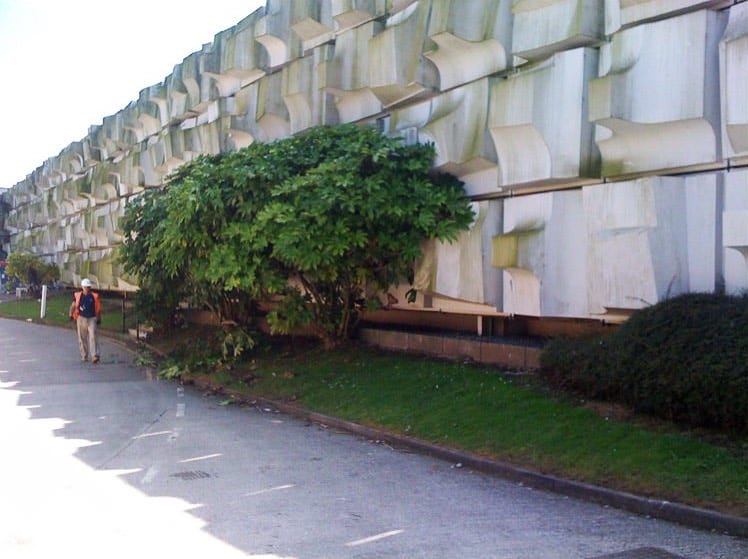
Only when you’ve handled this modular sculpture and refer back to the above photograph do you realise how big the original installation actually was. Paul Mount was not afraid of scale. At 6.8m high and 60m long - it was vast.
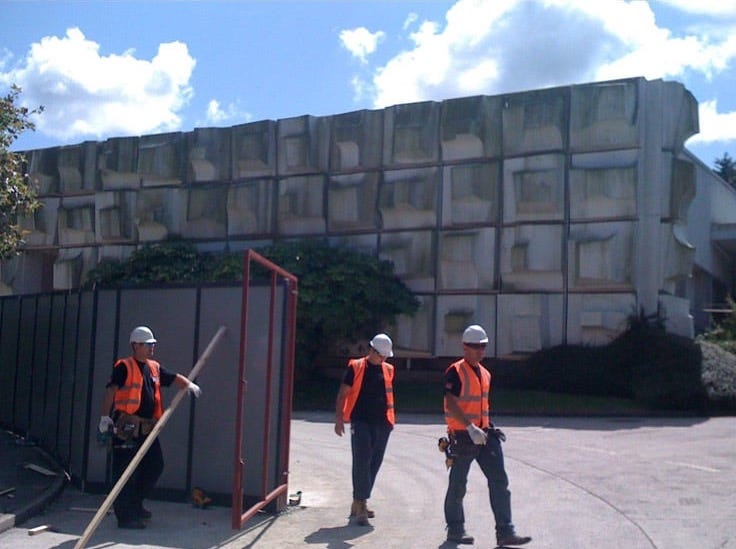
Mount made the Falmouth frieze in 1984. The huge north-facing wall along Leo’s supermarket was part of a building created by his close friend, the modernist architect John Crowther (1928-2012) whose practice was based in Truro. The project enabled him to indulge in a return to his “Tropical Modernist” heyday of the years he had spent in Nigeria from 1955 to 1962. In this Cornish sculpture, as in his works in West Africa, he focussed on surface articulation, reflection of light and was looking at modular repetition and mass production.
The Modernist style that Paul (and his wife Jeanne) Mount, Max Fry and the Borys group were advocating, in the late 1950’s in Lagos, often involved creating an outer decorative “grille” on their buildings, often in re-enforced concrete, that both shaded the walls from the African sun and allowed air to circulate. It was an effective cooling measure. It allowed for the engagement of decorative schemes in relief that Paul Mount excelled in. And within that framework Mount could engage with and promote the carving techniques and sculptural motifs of the Nigerian tradition. As Independence for Nigeria approached and the YABA Art Department (that Mount had gone to Lagos to set-up) started to teach and produce Nigerian artists, it seems that Mount’s intent was to inspire a new vernacular style from among them: a forward-looking Modernist style for the newly independent country.
“The characteristic rectilinear movements of his forms reflect his love of music, while the disciplines of the architectural relief called into play subtle formal engineering within often shallow or compact spaces. Mount’s early extended concrete wall for the Swiss embassy in Ikoyi, Nigeria (1960) established what would become a lifelong dialogue with buildings…”
…wrote Peter Davies in his Obituary to Mount in The Independent in January 2009, a few weeks before the Falmouth sculpture was almost completely destroyed.
“On one hand, the sculptures of Paul Mount displayed the cool geometries of classic modernism; on the other, something much less urbane – more like the firm-footed vitality of Yoruba wood-carving. Mount … created a distinctive fusion of these qualities. From his large, wood sculptures of the late 1950s through to his prolific series of abstract, cast-iron and bronze works from the 1960s onwards, to the mirror-like pieces in stainless steel …, he combined a passion for formal clarity with an instinct for sculptural power and presence.”
“He also produced architectural designs, painted, published novels and was an accomplished pianist. “I like form for its own sake,” he once remarked, “whether it’s in sculpture, design, music, architecture or painting.”” 2
***
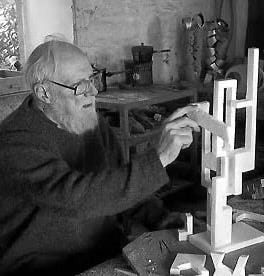
Mount was born in Newton Abbot, Devon. He attended Paignton School of Art, then the Royal College of Art. Come the war he served in the Friends Ambulance Unit, first in north Africa and then France. From 1948 he taught at Winchester School of Art.
“In 1955 he took a job in Lagos, Nigeria, setting up an art department at YABA Technical Institute. Starting with just an empty building, he designed the furniture and equipment, and recruited students. His work at YABA – one of the achievements of which he was proudest – led to two contacts that shaped his career. To ensure students learned marketable skills, he employed a wood-carver from Benin. Before long he was experimenting with sculpture – smooth, standing forms in iroko or ebony, reminiscent of Barbara Hepworth. His furniture designs, meanwhile, resulted in commissions from an architectural practice.3 By 1960 Mount was producing large-scale architectural works, such as his screen wall at the Swiss embassy in Lagos.
The need to create surfaces that deflected the heat while allowing air to circulate – the opposite of modern western architecture’s love of glass and light – helped to form Mount’s sculptural idiom. His cast-iron and bronze works often seemed to project a robust shield around their airy, inner spaces. Another possible African legacy was his refusal to waste anything. Many of his works in metal were fabricated from waste from previous sculptures.”4
What both of the above cited obituaries seem to miss is the extent of Paul and Jeanne Mount’s central role in what became known as “Tropical Modernism”. Maxwell Fry5, essentially London-based architect, colluded on numerous projects with the Nickson, Borys & Parters in Ghana and Nigeria and were central to the propagation of this brach of a global style in the exact years that Paul and Jeanne were resident there. In 1960 Fry designed the new BP offices in Lagos; skyscrapers started to appear downtown as the oil-men rocked up in Nigeria.
In January 2025 “De Zeen” magazine ran an article highlighting an initiative by the Omi Collective to document the best Tropical Modernist work of this era in Lagos6. Much of it that still survives is in a shocking condition. The founder of Omi, Olorufemi Adewuyi, picks out seven of the best examples. One, “The Western House” of 1958, by Nickson, Borys & Partners he identifies as “ …one of the earliest high-rise buildings to change Lagos’ skyline. Its vast blue, yellow, and white mosaic facade… is hard to miss and leaves quite an impression.” It was designed by Jeanne Mount. Another, Tadema Dalewe Square was designed from 1960 by Isaac Fola-Alade - who was to bring in Paul Mount to embellish this prestigious downtown project. We will return to this and some other notable works shortly. Mr and Mrs Mount left quite an architectural legacy in Lagos before they returned to England and it is poorly recorded and under-reported.
With the Art School established and Nigeria rapidly veering towards post-independence chaos, Paul and Jeanne Mount settled at Nancherrow, near St Just-in-Penwith, Cornwall in 1962. They were to spend the rest of their lives there. Paul’s work continued to develop along two strains in Cornwall - on one hand more totemic, figural and interlocking forms such as “Spirit of Bristol” (1968) and “SkySails” (1970), both stainless-steel compositions originally made for sites in the centre of Bristol [the latter now in Exeter] and both evoking the theme of sailing. On the other hand were his architectural reliefs, with his collaborator John Crawford - a stubborn Yorkshireman and close friend of Barbara Hepworth.
“His awareness of sculpture as architectural embellishment – informed by the bas-reliefs on the Romanesque churches he visited in France, where he kept a holiday home – led to some notable large-scale sculptures sited in prominent urban locations.
“He was one of the last sculptors in a tradition stemming from Henry Moore and Hepworth… He was one of the last, too, of those British artists whose careers were interrupted by the second world war – who, once free to work again, never really lost their sense of a world to be made anew through art. For Mount, sculpture expressed an essential human dignity. “The way that two shapes relate,” he observed, “is as important as the way two people relate.”7
***
With the fibreglass pods unloaded at the yard back in Oxfordshire we went about restoring the corners. The removal from the supermarket wall and the cramming of the sculptures into the Falmouth gardens had caused many of the corners to rip. We then gave them a wash and made a smaller version of Paul Mount’s vast installation: wrapping the exterior of our largest building with them. They were much admired in their new home with numerous people spotting them from the road - pulling in to ask what on earth they were. From the website we had interest from as far afield as Edinburgh and Santorini.
Soon they were spotted by the owners of Omved Gardens in Highgate8.
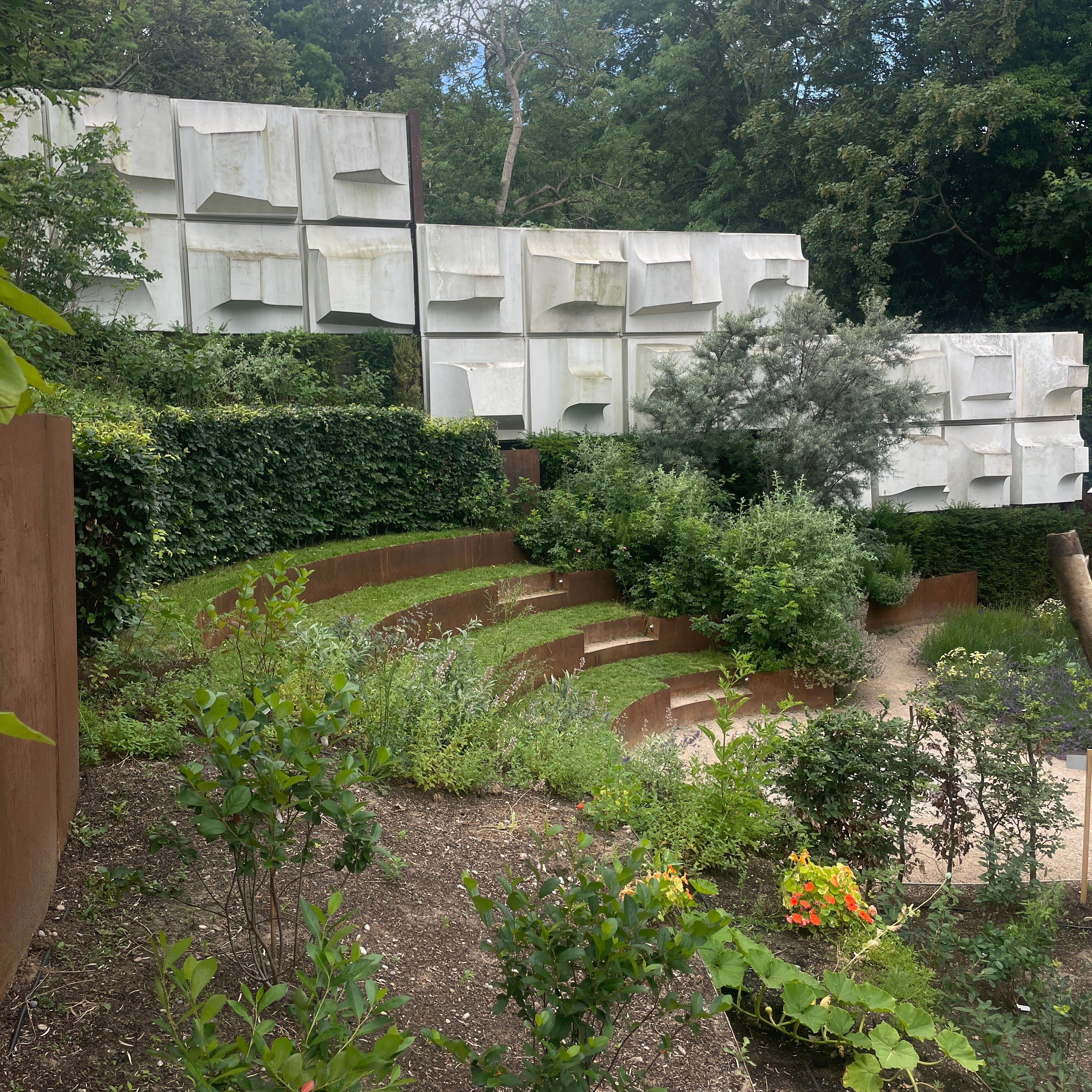
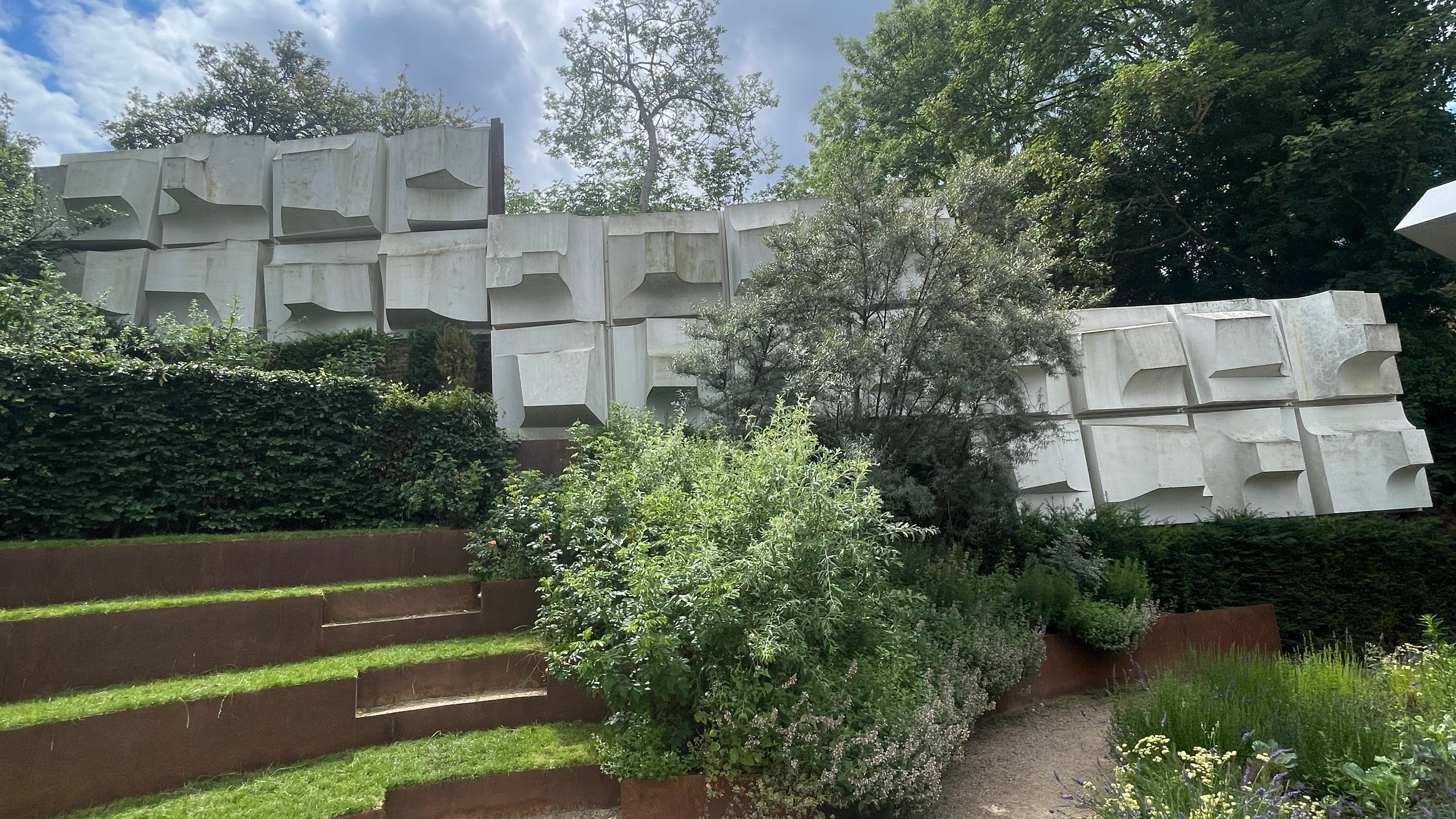
Omved is a fascinating place. It had been the site of a garden centre and plant nursery for many years, secreted in what appears to be an old quarry behind Highgate High Street. A few years ago, the new owners had applied for planning permission to build some houses on the land. They found themselves locked into a heated planning dispute, as is usual, and asked themselves if they really needed this hassle: why not do something more wholesome and worthy? With a passion for sustainability, heritage seed stocks, a keen interest in organic farming and the future of agriculture, a roving organic garden was designed around a Seed Bank. Winding paths now guide you past pavilions and greenhouses dedicated to learning, sharing, propagation and sustenance. There is a small amphitheatre cut into a bank for performance. The designers wanted to install a dramatic vertical backdrop to define the space in its verdant dell and the Paul Mount Falmouth sculpture was an unusual opportunity. They drew it into the plans.
We were shown the drawings and cleared some space in the yard in order to lay the remaining pods out in the proposed format on their backs. There were to be four elevations of eight blocks, following the path descending the steep hill into the dell. Once laid out, we sent up a drone to film the pods in the proposed format from above. Everyone loved it. A deal was done. We delivered them. Giant steel racks were built in order to mount them.
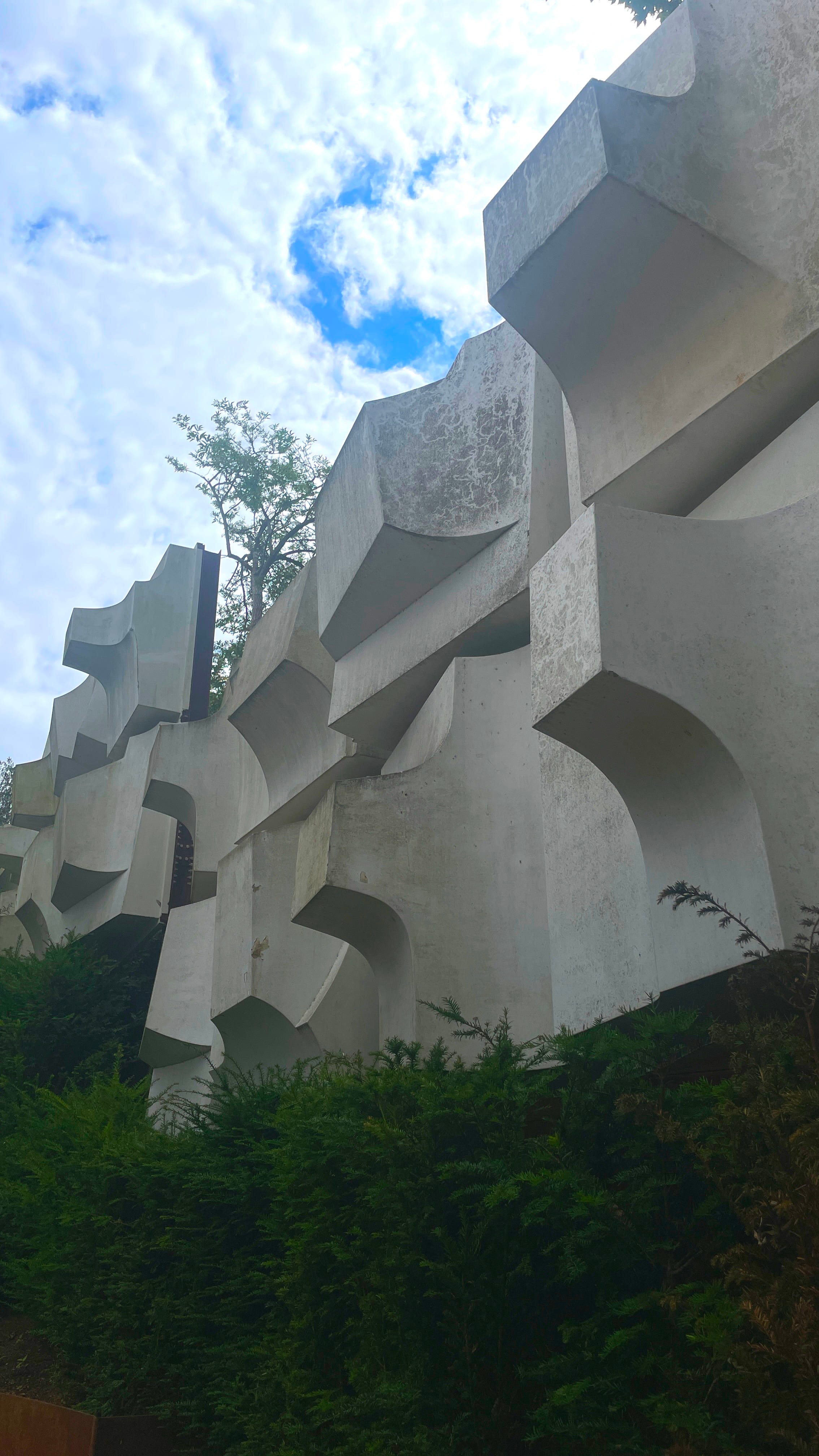
Karen Pagarani at Omved Gardens comments:
“The sculpture is an interesting example of salvaged art which would have disappeared otherwise. The garden started out using a repurposed greenhouse so salvaging has been our ethos from the beginning. Watching a piece of art get reborn is very life affirming. We debated whether we should paint and repair some of the pieces but we felt that their history makes them more interesting.
Our visitors have been intrigued by the sculpture with some people thinking they are sound buffers as they are placed above the amphitheatre space. Others have loved the shapes. The pieces seem to fit the setting very well and look at home. It’s a great spot for people to be able to take them all in.”
Aside from Omved we did sell a number of the pods to others - there’s some on a roof-terrace in Mayfair, and - via the pictures and story told on our website - others were later installed in their Spitalfields shop by our friends at Aesop.
Although the vast sculptural wall that he had created in 1984 was largely lost, I think Paul Mount would have been thrilled to see his sculpture salvaged, re-invented and re-hung at Omved Gardens.
***
It was on 1st October 1960 that Nigeria gained its independence from Britain. The formalities and celebrations were centred on the Old Race Course in downtown Lagos. This large open space had long had grandstands and a cricket ground in its colonial days - so it leant itself to a parade. There was dancing and there were military displays. Princess Alexandra of Kent was in attendance representing the Queen. The newly elected prime minister Tadema Balewa gave a speech, both moving and suitably diplomatic, detailing the long process that had got them to this momentous day and what it meant to the people. The Union Flag was lowered and the new Nigerian flag was raised.
The Old Race Course on Lagos Island was to serve as the centre of Independence Day celebrations annually thereafter, as well as national sporting events. Twelve years, a couple of coups and a civil war later the entrance to the arena was given a new spectacular gateway. In a bold gesture, looking to the future, it was not built in old colonial classical architectural styles - it was designed in the Ministry of Works, overseen by Isaac Fola-Alade (1933-2021), in Brutalist concrete. It was hung with five huge pairs of bronze and iron gates deftly incorporating a modernist look with traditional Yoruba motifs. These Tropical Modernist gates were designed by Paul Mount.9
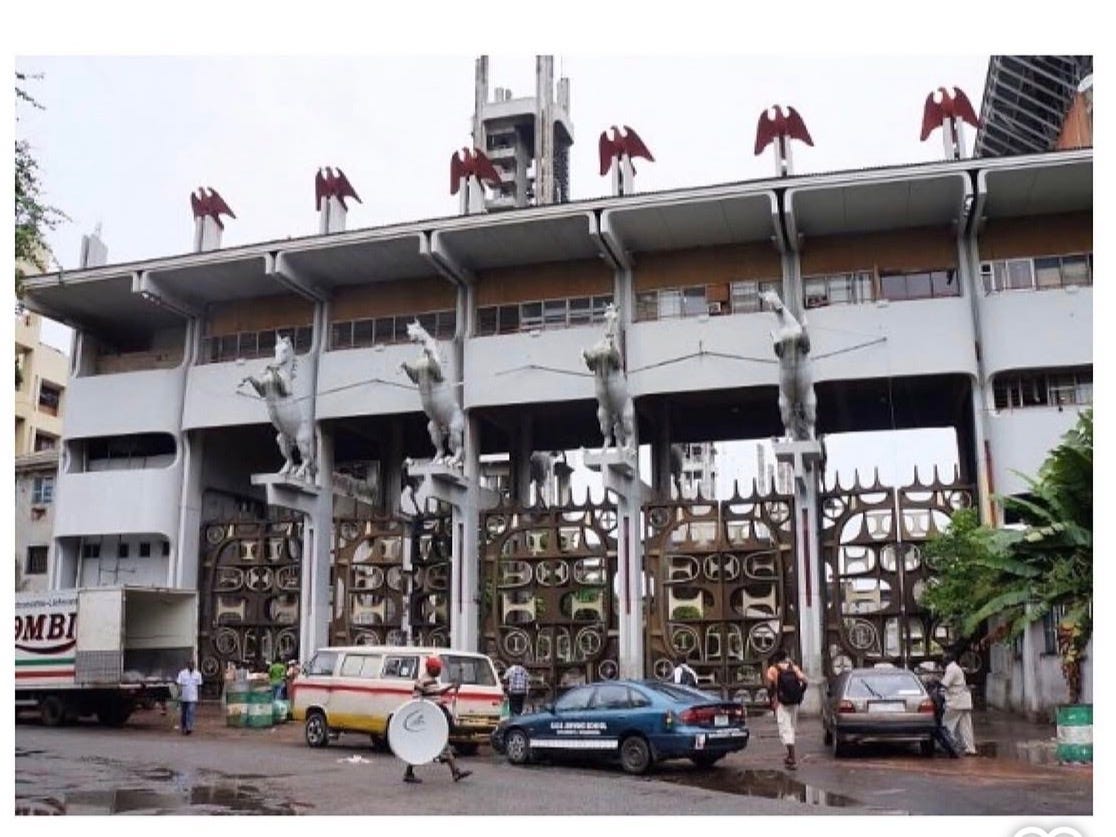
The gateway gave a grand entrance onto the parade ground with grandstands big enough for over 50,000people. In 1972, it was renamed Tadema Balewa Square (Sir Abubakar Tadema Balewa, Nigeria’s first and only Prime Minister, before Nigeria was declared a Republic in 1963, was assassinated in 196710). The events arena is now known by all as “TBS”.
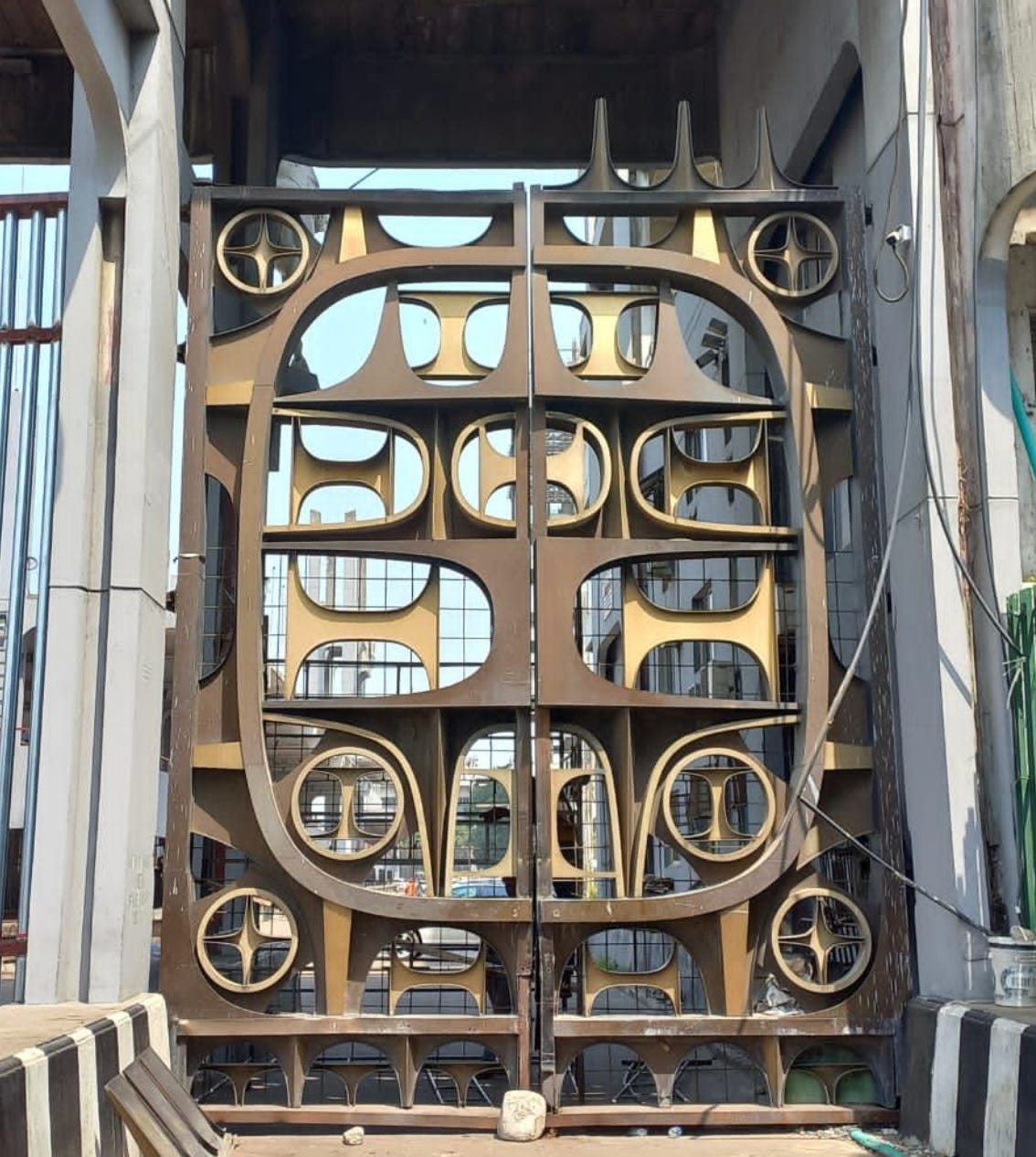
I don’t imagine, but I may be wrong(!), that the modernist design of the gateway with its carefully conceived concrete curves and shadow-gaps and its massive pierced geometric gates was ever supposed to be embellished with four large sculptures of rearing white horses and ten displaying eagles above them, but that is what happened. The horses and eagles smack of the preferred art of dictators, rather than modernist designers, and may have been introduced, by decree, as an afterthought.11
The administrative capital of Nigeria was, in time, moved from Lagos to Abuja - a process that was initiated in 1975 and completed by 1991. Tadema Balewa Square lost some of its national importance and, as Lagos suffered under a massive population explosion and traffic gridlock, the square lost its ceremonial grandeur and started to deteriorate.
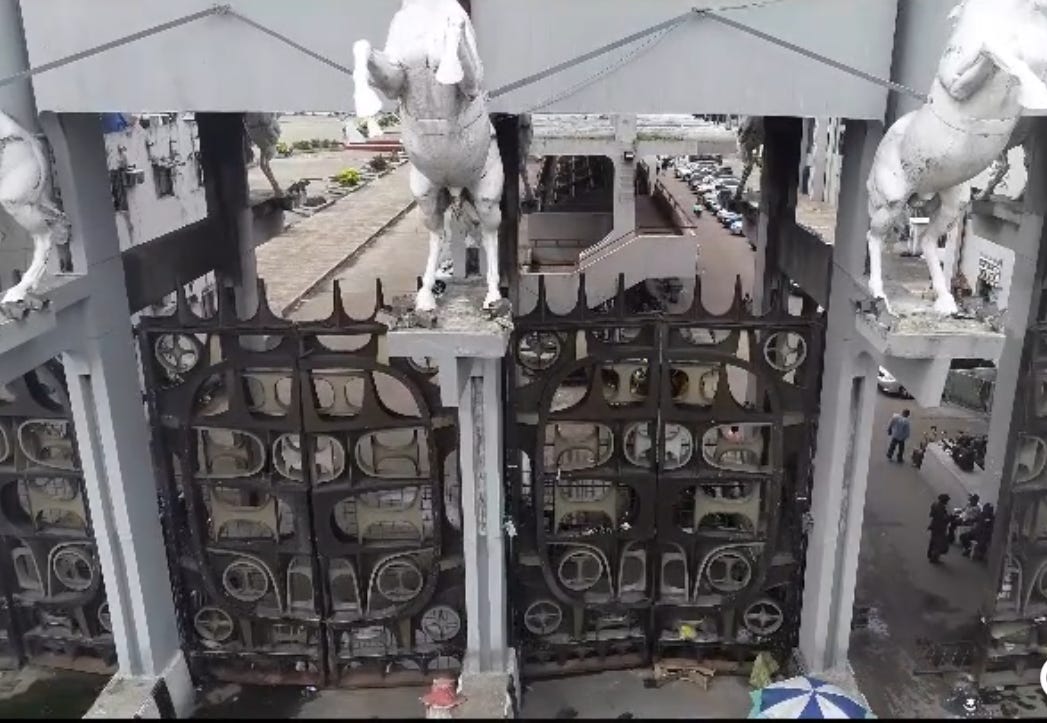
Josephine Ogundeji in Punch Newspaper in 2023 reported:
“Tafawa Balewa Square … has become a shadow of itself. The sight of hawkers, hooligans, food vendors, watch repairers, itinerant cobblers, and commercial tricycle riders taking over the entrance of this monument has overwhelmed its splendour.
The walls devoid of paint, the concrete buildings attempting to hide protruding irons, and deteriorated gates … paint a picture of the current despicable state of Tafawa Balewa Square.”
In 2007 TBS, including its buildings and structures and its rare open space (and the towering obelisk war memorial) was given over by the Government as a “concession” to a private firm called '“Build Hope Services International” (BHS) in a 30year deal. Despite the gateway being a Grade 1 Listed structure under state law, and within an historically important site, the new overseers - with grand schemes for lucrative new buildings in the pipeline - allowed the complex to fall into dilapidation. No maintenance was carried out and the site took on a derelict air.
In January 2025, they tore down Paul Mount’s gates.
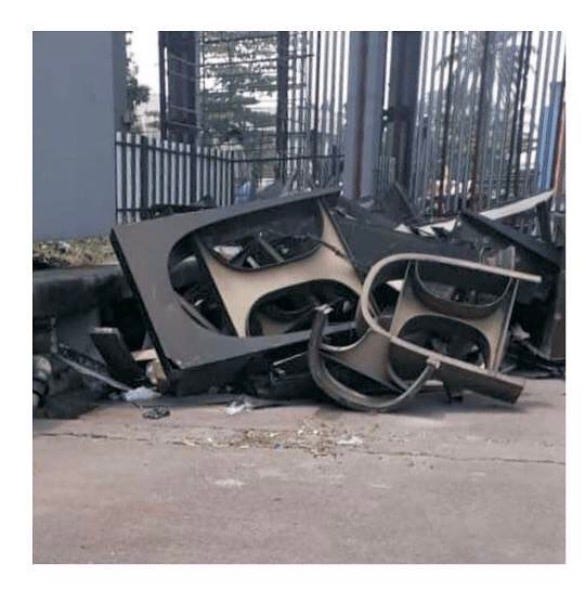
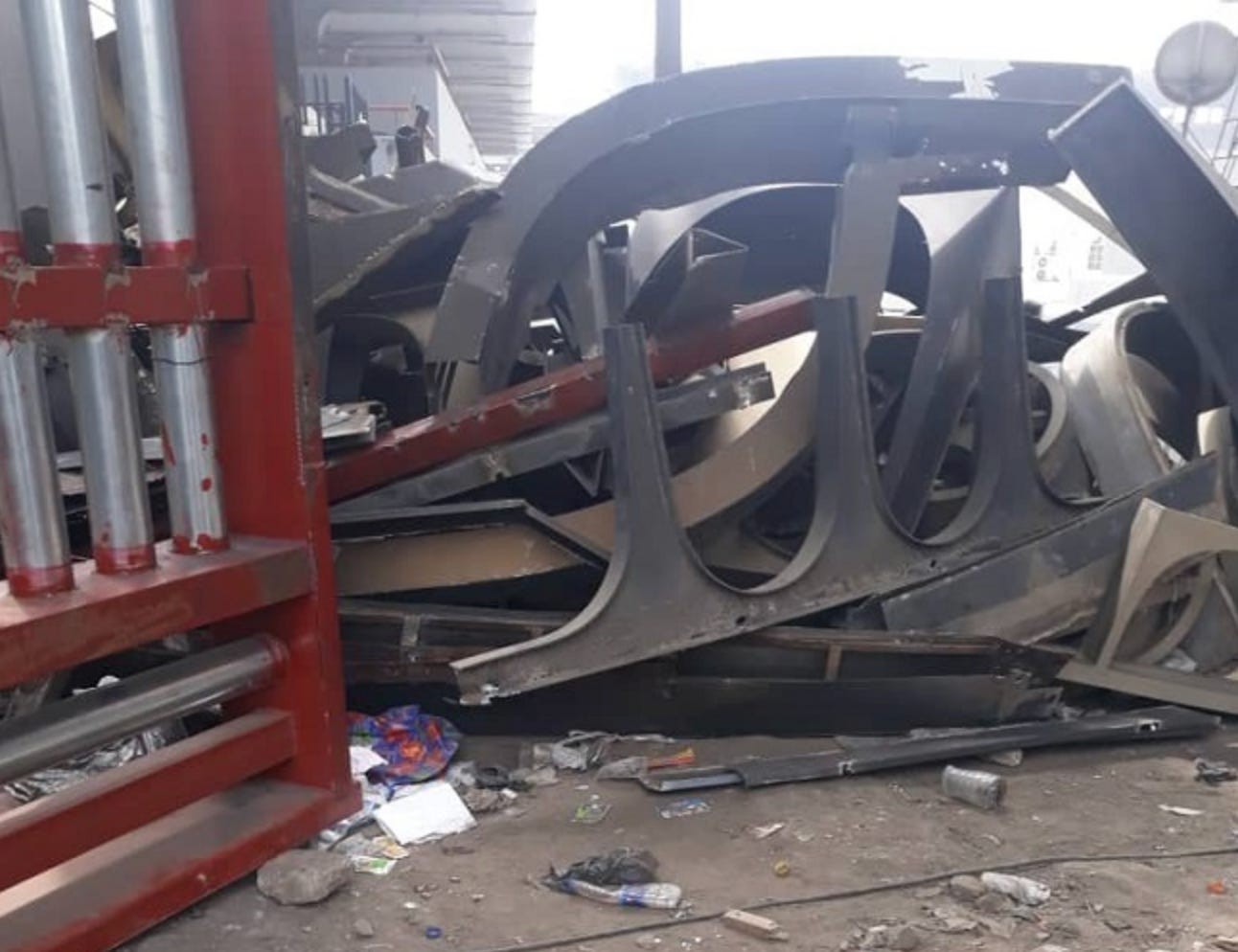
“Legacy 1995” a Nigerian pressure group for the preservation of their built heritage, have published photographs of the 65year old gates smashed up and in a broken heap of twisted metal. One of the five pairs of gates did remain for a while but it too has now been removed. Large security grilles now occupy the five apertures.
In January 2025, The Nigerian Tribune reported,
“The Nigerian National Committee of the International Council on Museums and Sites (ICOMOS Nigeria) has expressed shock, displeasure and disappointment over the wanton defacement of the gates of the Tafawa Balewa Square (TBS), a site considered to be an important national edifice and listed as a Lagos state cultural monument site.
The president of ICOMOS-Nigeria, Mr Aliyu L Abdu, expressed surprise that such a negative activity can take place in day light without fear of any consequences and that the Lagos State government which recognizes and lists Tafawa Balewa Square as an important state monument has allowed this to happen under its watch.”
So it seems that Sainsbury’s supermarket in Falmouth are not the only ones.
***
Elsewhere, Paul Mount’s extended concrete screen wall for the Swiss embassy in Ikoyi mentioned in the Obituaries above (possibly more accurately described as a residence or a consulate since 1991) has also been destroyed in recent re-developments. At 180m long it must have been quite something. I’ve seen mention of other gates by Mount at the Old State Marina House but this important Lagos mansion has been allowed to fall into dereliction under successive administrations and the gates, may now have gone.
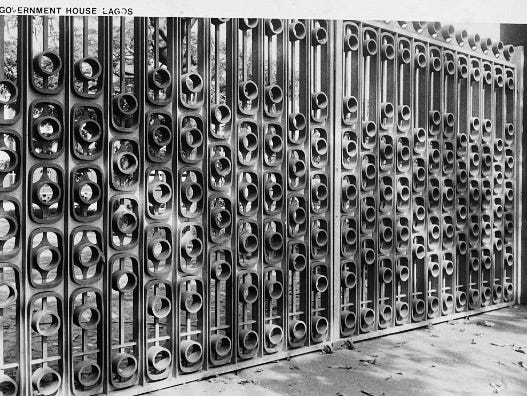
Whilst Paul Mount was prolific in his output and had some spectacular, and huge, commissions in both Britain and Nigeria you now have to hunt quite hard to find any surviving examples of his architectural work. Only a narrow repeated account of Paul Mount’s prolific output is ever mentioned by Gallerists and Dealers who trade his smaller sculptures for large amounts. So it is heartwarming that Omved Gardens in Highgate now have a good example of Mount’s large scale Tropical Modernist sculpture on permanent display, back from the brink, for all to enjoy. We can only hope that a similar, happier outcome for the TBS gates can be achieved in Lagos.
The “Geometry of Fear” was a phrase coined by Herbert Read in describing a group of post-war British sculptors, including Chadwick, who were heading away from the biomorphic forms originated by Jean Arp and the surrealists - towards more spiky totemic figures.
Michael Bird in his Obituary to Paul Mount for The Guardian in January 2009
Maxwell Fry (1899-1987) was a radical from Liverpool who had formed a London based architectural practice with Walter Gropius, he of Bauhaus, before the second war (Gropius moved to the US and invited Fry to join him but he declined). Fry moved in interesting circles including LeCorbusier, Moore and Hepworth and after the war was instrumental in designing building Empire projects in Ghana and Nigeria. His Nigeria work maps with Mount’s years there 1955-62 and included: The Co-operative Bank at Idaban (1956), a teacher Training College in Wudil (1959), various Lagos schools the same year, and the BP offices in Lagos (1960).
Michael Bird in his Obituary to Paul Mount Ibid
See footnote ‘3’ above.
See @NigerianModernism.drive on Instagram
Again: Michael Bird’s Obit. in The Guardian 12th February 2009
See Omved Gardens Website for upcoming News and Events.
The building of the new TBS complex was a project initiated in 1960. But there doesn’t seem to be a clear timeline of its construction. Paul Mount probably designed the gates for the project when it was initiated in 1960 - the gateway building quite possibly taking another 12years to reach completion.
I am intrigued as to who designed his mausoleum - the designer does not seem to be credited anywhere. Could the tiled interior have been inspired by Jeanne Mount?
Those campaigning for the restoration of the gateway do seem rather keen on retaining the horses and eagles as they are seen as nationalist emblems.