RUSSIAN STATUES
A set of Egyptian-revival statues from the Palace of Pavlovsk

This will perhaps be the oldest of the Architectural Salvage Journal stories. Not that it is about the oldest salvaged architectural fragment, but that this piece was written nearly 30years ago in my first year or so after having started working at LASSCO (here with some edits). It concerns a set of large bronze statues. They were offered to us from the trade: I can’t remember exactly who by. They had been cast by a team in Kiev ten years before. The Ukrainian foundry had been given access to the early 19th Century plaster originals in Russia in the late 1980’s, shortly before the break-up of the Soviet Union, and had cast them in bronze. Some plaster figures had been cast from the same mould back then too, and, by chance, the plasters came up for sale a couple of weeks ago (May 2026). Photographs of those plasters being made in the Ukraine foundry in the late 1980’s showed the bronzes we acquired in the background.
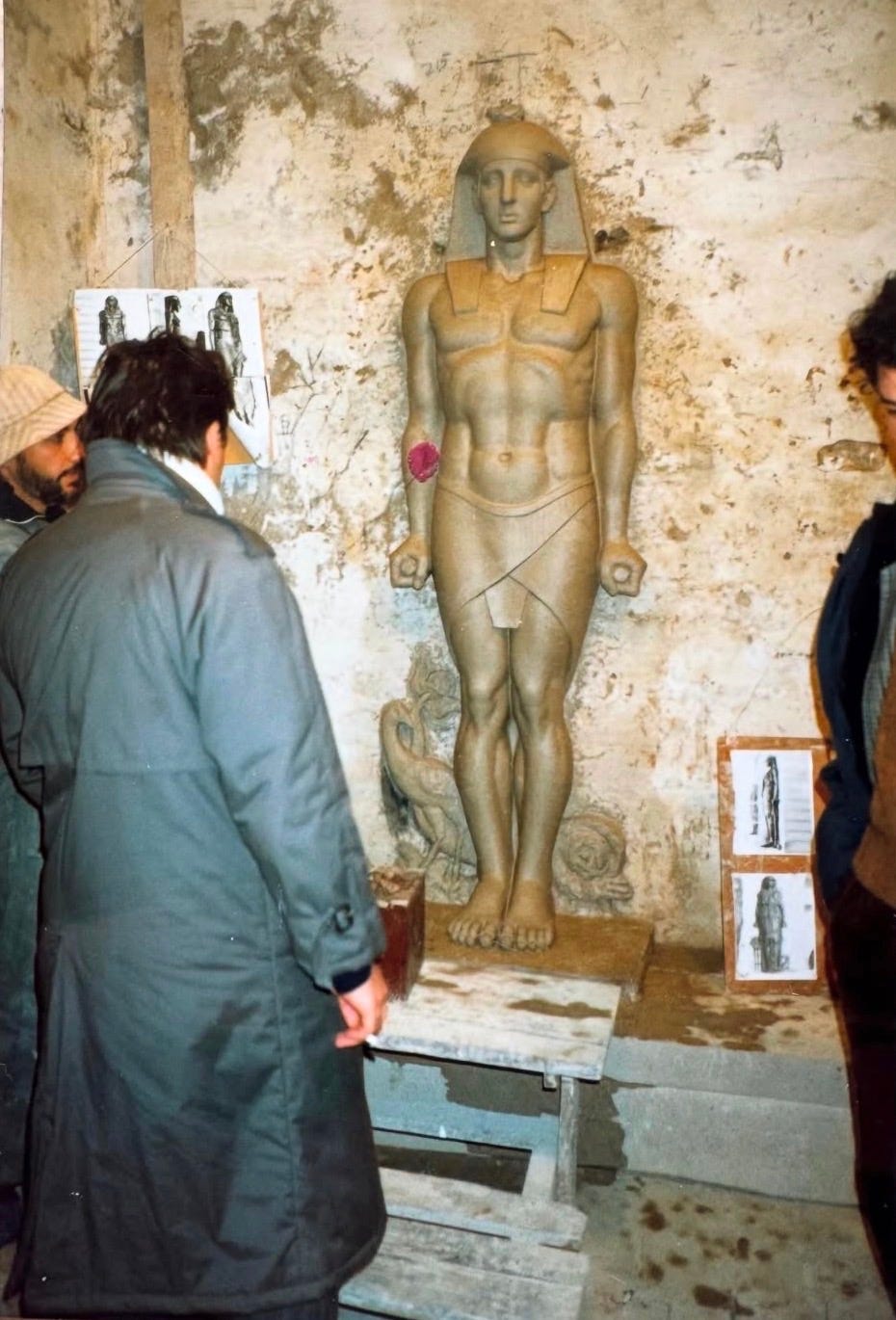
I do remember who bought them from us though - as will be revealed (the bronzes weren’t with us long). I certainly remember how heavy they were.
Our website is also about to turn 30years old. (Not many people can say that!). I can’t recall if these statues were catalogued on that early version of the LASSCO website but in those days, with internet access still limited, we were still producing short runs of info about our best stock on a huge colour photocopier and sending them out in the post. How quaint. What follows is the story I wrote about the bronze figures. I recently found one of those photocopies in a drawer - back when the dialling code for London was “0171”.
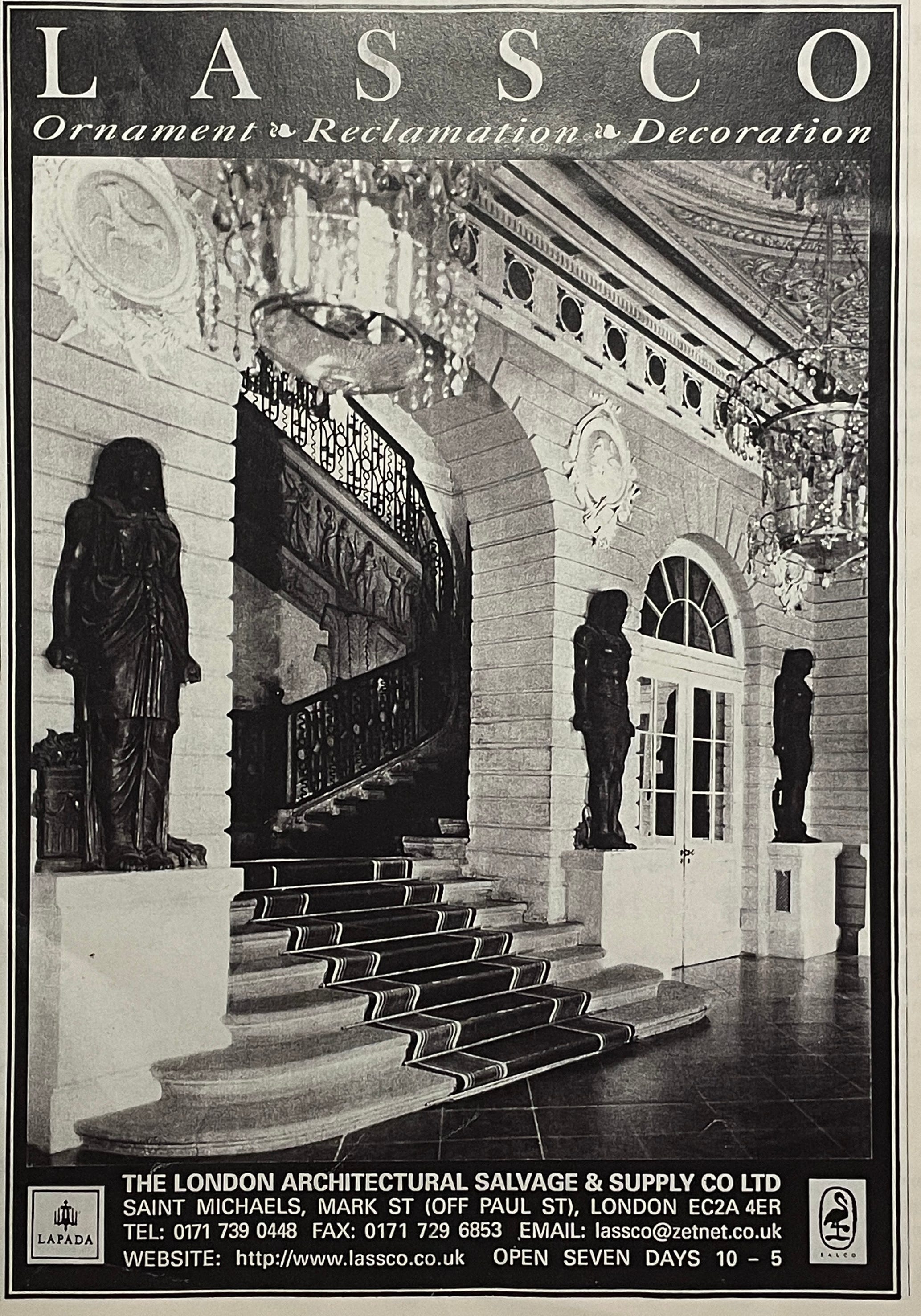
I described the statues as follows:
A series of ten bronze figures in the Egyptian Revival taste after those in the “Egyptian Vestibule” at the Palace of Pavlovsk, sculpted c.1803 by Ivan Prokofiev (1858-1828)
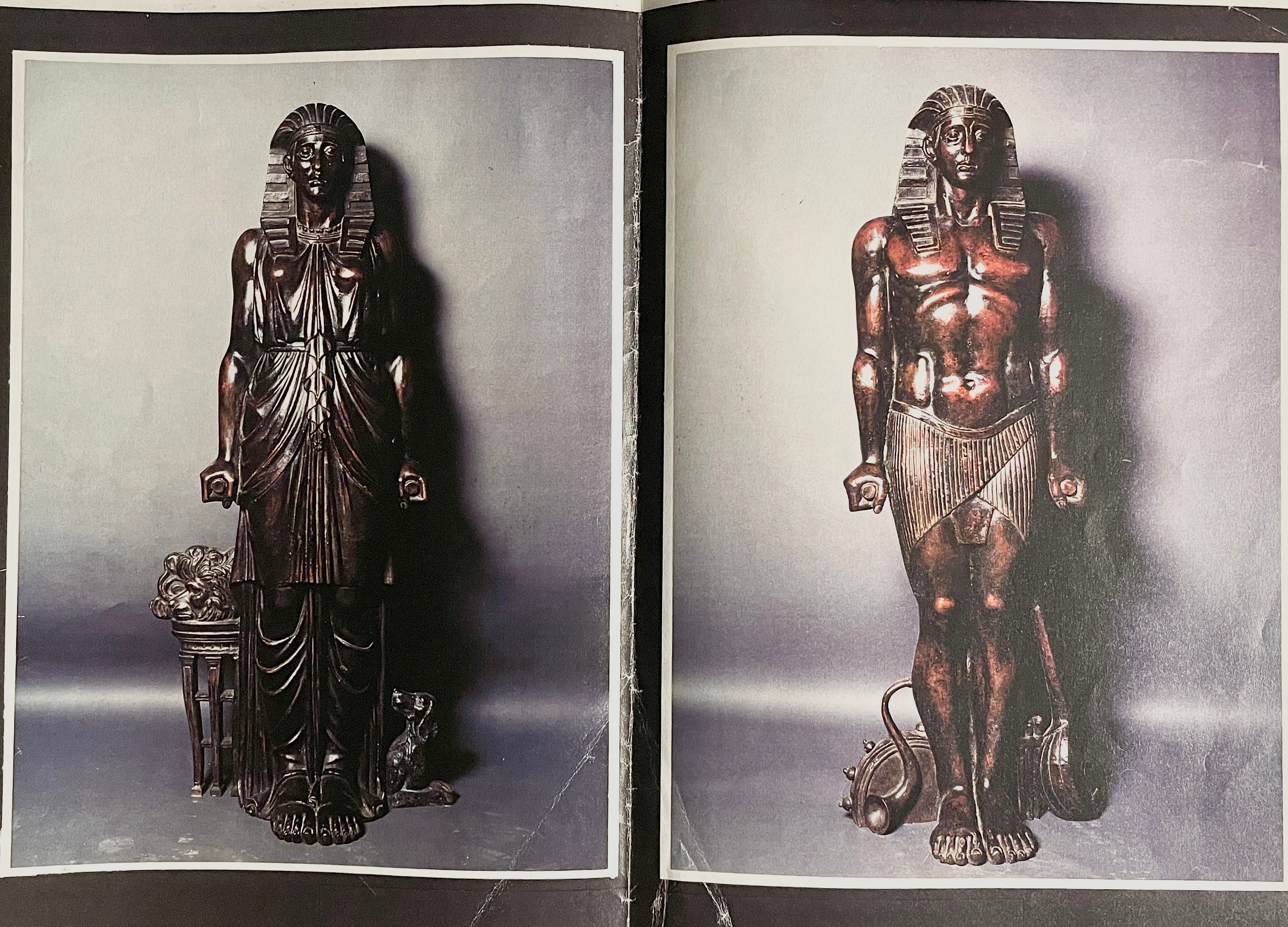
The five male and five female standing figures cast in full relief with Egyptian head ornament “nemes”, the males in a loincloth “shendyt”, the females in “chiton”, and presented in a deep bronze patination, six accompanied by attributes behind the feet denoting the months, each approximately 190cm high. They are based on the Roman-Egyptian canon Antinous-Osiris, after the original antique statue of Hadrian’s favourite Antinous in Egyptian garb unearthed at Tivoli.
These bronze casts of the original bronzed plaster figures were created by two sculptors at Pavlovsk shortly before the crumbling of the Soviet Union in the late 1980’s.
A pair from the set of twelve were sold at a Paris auction in 1997 realising nearly £25,000 - these are the remaining ten.
And the story behind the figures followed:
The Palace of Pavlovsk
The Palace of Pavlovsk was built for Tsar Paul I (1754-1801), by Catherine the Great (1729-1796); he was her only son. The palace is located southeast of St. Petersburg, a few miles beyond the town of Tsarskoe Selo. The original estate was around 1500 acres and was a gift from Catherine to Paul on the birth of his first son (the future Tsar Alexander I) in 1777.
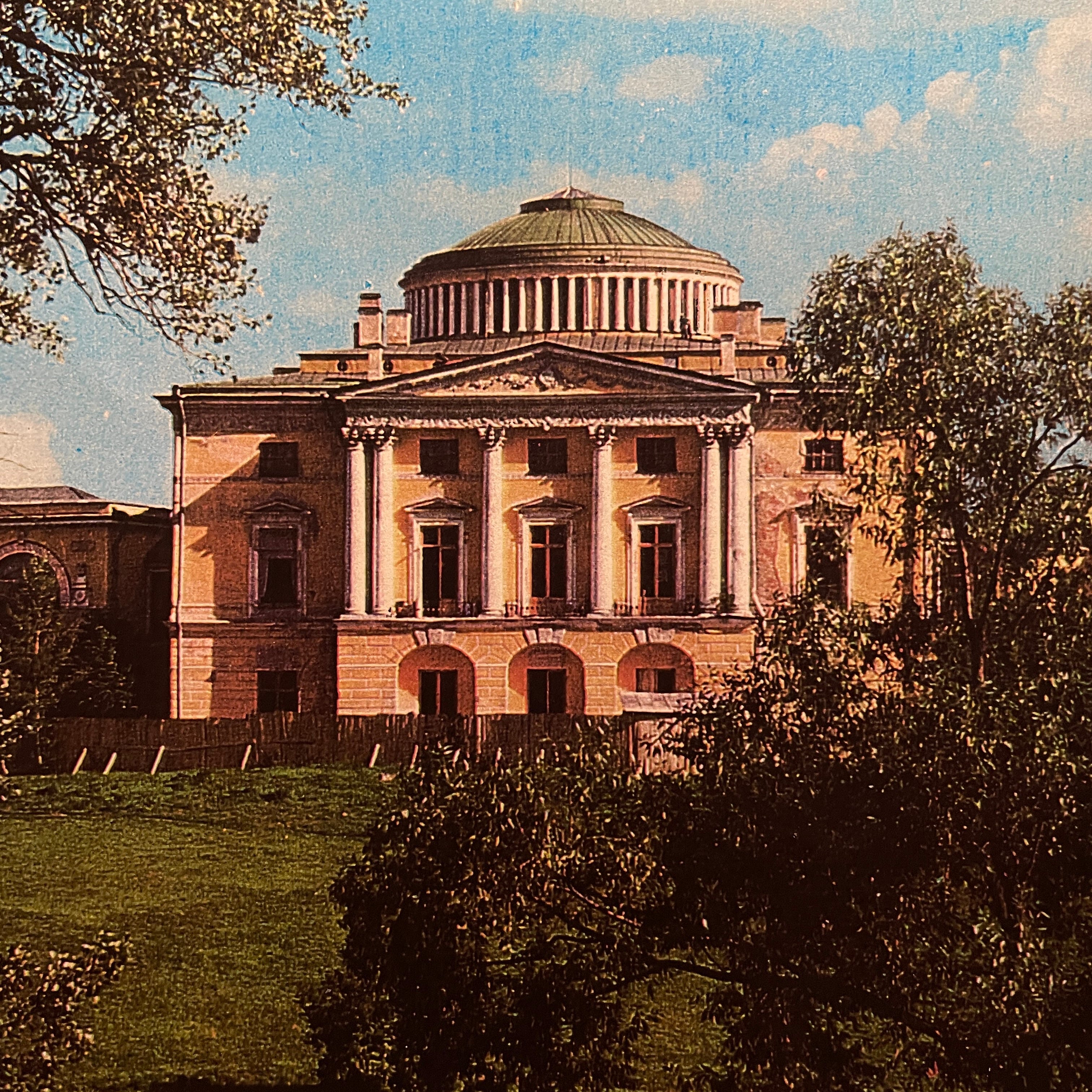
Work constructing the Palace began in 1781 under the direction of the established Scottish architect, Charles Cameron (1745-1812).
Being one of Catherine’s favourite architects did not entirely endear Cameron to the then Grand Duke Paul. The problem was deeply embedded as Paul detested his mother, after an estranged childhood, and had a habitual aversion to any of her favourites. After Cameron’s eventual departure, many other celebrated architects worked at Pavlovsk, including Voronikhin, Brenna and Rossi.
Cameron had conceived and built the Palace as a Palladian mansion but was continually frustrated by Paul and his second wife Maria’s interventions bringing in the more contemporary French tastes and furnishings from buying forays in western Europe. The royal couple were known to hit Paris, in the vibrant, perhaps somewhat dangerous, new Republic - sometimes in disguise and undercover - and go on crazy buying sprees.
Even before the murder of Paul, by then the Tsar, in 1801, Pavlovsk had become the primary residence of his wife Maria Feodorovna (the Russian name granted to her, she was formerly Sophia Dorothea of Württemberg) .
In 1803, with Pavlovsk only just fully completed, it was almost completely destroyed by a huge fire. The tenacious and inspired Maria Feodorovna simply ordered that it be rebuilt better and refurnished exactly as it had been. With some extensions and improvements this was duly implemented over the following decade.
The focus of this story is particularly the Egyptian Vestibule and the sentinel figures that stood there.
The Egyptian Vestibule
The Egyptian Vestibule forms the main entrance from the central oval courtyard of the Palace. Cameron’s room of 1786 was changed in character under the celebrated Russian architect Andrey Voronikhin (1759-1814), subsequent to the fire of 1803. Voronikhin employed Ivan Prokofiev (1758-1828), who had worked previously under Cameron on the room’s original figures, to execute the twelve sentinels, now in the Egyptian taste to his drawings. The figures were modelled in plaster and then bronze patinated. Each figure is raised on a plinth and stands with attributes at their feet denoting a month; they respectively illustrate seasonal activities and pastimes. Above each figure is a plaster relief medallion depicting a sign of the zodiac. The ceiling of the room is a grisaille fresco originally by Giovanni Scotti depicting four groups of putti portraying the four seasons. The cognoscenti of European Society, in London, Paris and beyond, were fascinated by the burgeoning archeological discoveries in Egypt and it became all the rage. (Thomas Hope in Marylebone was an instrumental influencer of his day). Here, near St. Petersburg, with some restoration, the Vestibule that had largely survived the 1803 conflagration intact offered the opportunity to adapt the style to the latest neo-classical trends - in the entrance vestibule it was Egyptian, in the Ballroom upstairs it was Greek.
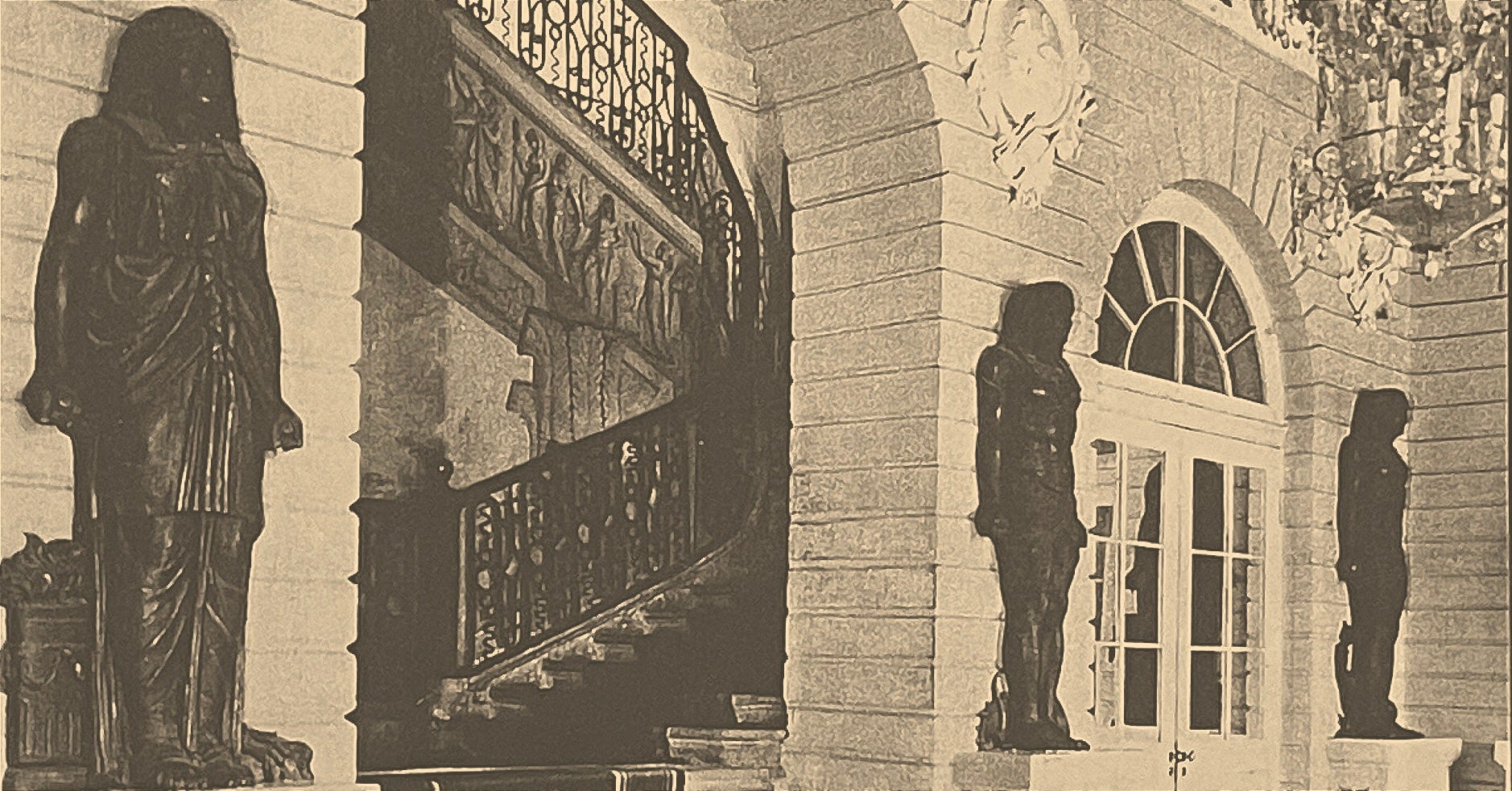
The decades rolled on. After Maria’s death in 1828 the Palace of Pavlovsk passed to her son, Grand Duke Mikhail Petrovich. Mikhail was childless and bequeathed Pavlovsk to his nephew Konstantin Nickolaevich, who left it in turn to his son, the famous poet Konstanin Konstantinovich. During this period the main building of the Palace came to be recognised by the Romanov family as a unique artistic and historic legacy. They ensured it was preserved as a virtual museum. Very few changes were made to the decoration and it continued to have the look and the feel of the early 19th Century.
St. Petersburg was growing and the gardens and parks around the palace were expanded. They became a popular day-out for the burgeoning bourgeois population. In time there was an intentional push to commercialise what was becoming a popular outing for the people of St. Petersburg - the area was modelled on the famous “Vauxhall Pleasure Gardens” in London. And here, briefly, there’s an etymological tangent that can’t be ignored:
In 1838 it was time for Russia to build its first railway. The first railway in Russia ran on tracks laid from St. Petersburg to the parks and gardens at Pavlovsk - modelled, as they were, on the Vauxhall Pleasure Gardens. There were two terminii and no other stops. The Pavlovsk terminus became known as “Vauxhall”. It stuck. The word for any large railway terminus in the Russian language today is still “Voksal”. We’d better move on….
After the Russian Revolution in 1917, the palace passed through difficult times involving many threats to its very survival. Under Stalin however it came to be seen as an example of the past achievements of the Russian people and was actively, perhaps surprisingly, preserved. Then came the Second World War.
Pavlovsk During World War II:
Suzanne Massie writes at length in her book “Pavlovsk- The Life of a Russian Palace” (pub 1990) of the huge operation attempting to remove the unique treasures from the Palace ahead of the advancing Nazi armies. It really is stirring stuff. A young Anna Ivanova took charge of the evacuation from 1940. She had an intimate knowledge and passion for Pavlovsk and its contents. Crate after crate of priceless Romanov valuables were carefully catalogued and packed: they were headed for Siberia where an Opera House was to prove a ideal storage facility.
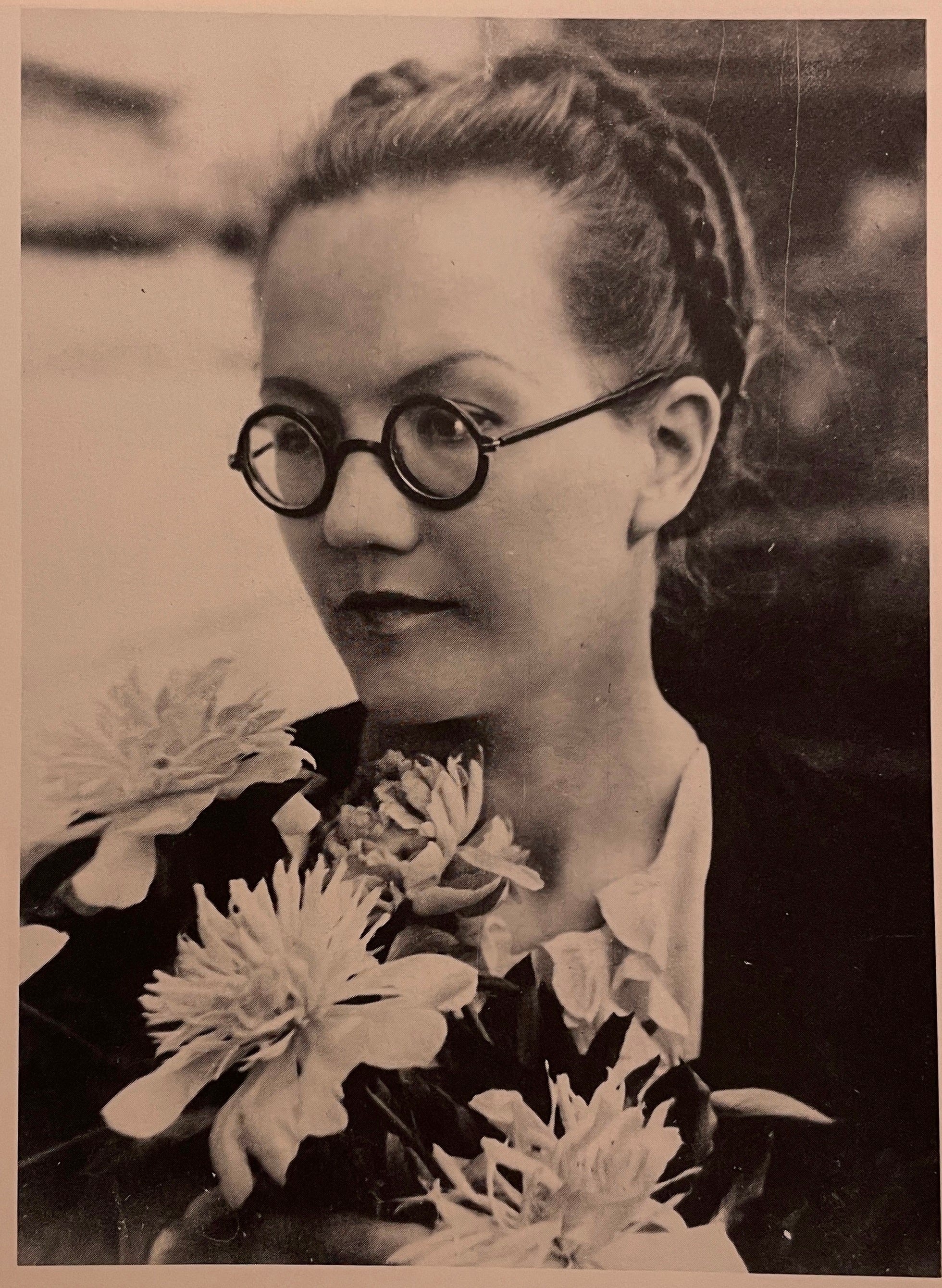
As the German army approached over the ensuing weeks, Anna frantically oversaw the packing and consignment of the thirteen thousand priceless works of art that they were endeavouring to save. They had to create packing materials from whatever they could find - they ended up scything hay in order to pack the glass-ware. The bombing of the boarded-up palace was continuous. She supervised her team of thirty women and a few older men (not serving at the front) from a
“worktable set up in the mirrored Egyptian Vestibule, with the twelve foot high black Egyptian statues representing the twelve months of the year looking on like frozen guardians”.
In her extensive diaries she wrote,
“(The packed crates) were brought in through every door and the statues, reflected in the mirrors seemed either to advance on me or retreat, to the point where I became dizzy. The bombardments and shooting were almost constant. Once, two pieces of shrapnel fell right on my desk, I saved them”.
Secret compartments were constructed in the cellar to conceal larger and priceless, untransportable, sculpture whilst, in the park, the numerous ancient Greek and Roman and Renaissance statues were buried for safe-keeping, up to three metres deep. (Anna surmised that the insurgent Gestapo would dig to 6’ to find buried statues, but not to 10’ - it worked, the Germans dug but didn’t find them). [Look out for mention of Pavlovsk Renaissance sculptures in an upcoming Architectural Salvage Journal post].
In the chaos, Pavlovsk filled with refugees and soon it became the front line. Finally, with German soldiers in the palace grounds Anna Ivanovna and the last two workers left, making a close but dramatic escape on September 15th, the beginning of the nine-hundred-day siege of Leningrad.
The Gestapo took over Pavlovsk as their headquarters for two and half years. It was sickening. During their occupancy they stole, smashed or burnt virtually all the remaining works of art and some of the fabric of the building. The Ballroom was converted into a motorcycle and car-repair workshop, wrecking the priceless floor inlaid with rare timbers. The marble floor of the Egyptian Vestibule lent itself better, it would appear, for beatings and torture.
On her return to Pavlovsk in 1944, after the German retreat, Anna Ivanovna recorded,
“On the floor of the Egyptian Vestibule there had been torture. The floors were covered with blood. Stoves stood on the parquet floors … Pipes were led through the windows, walls and mirrors knocked through”.
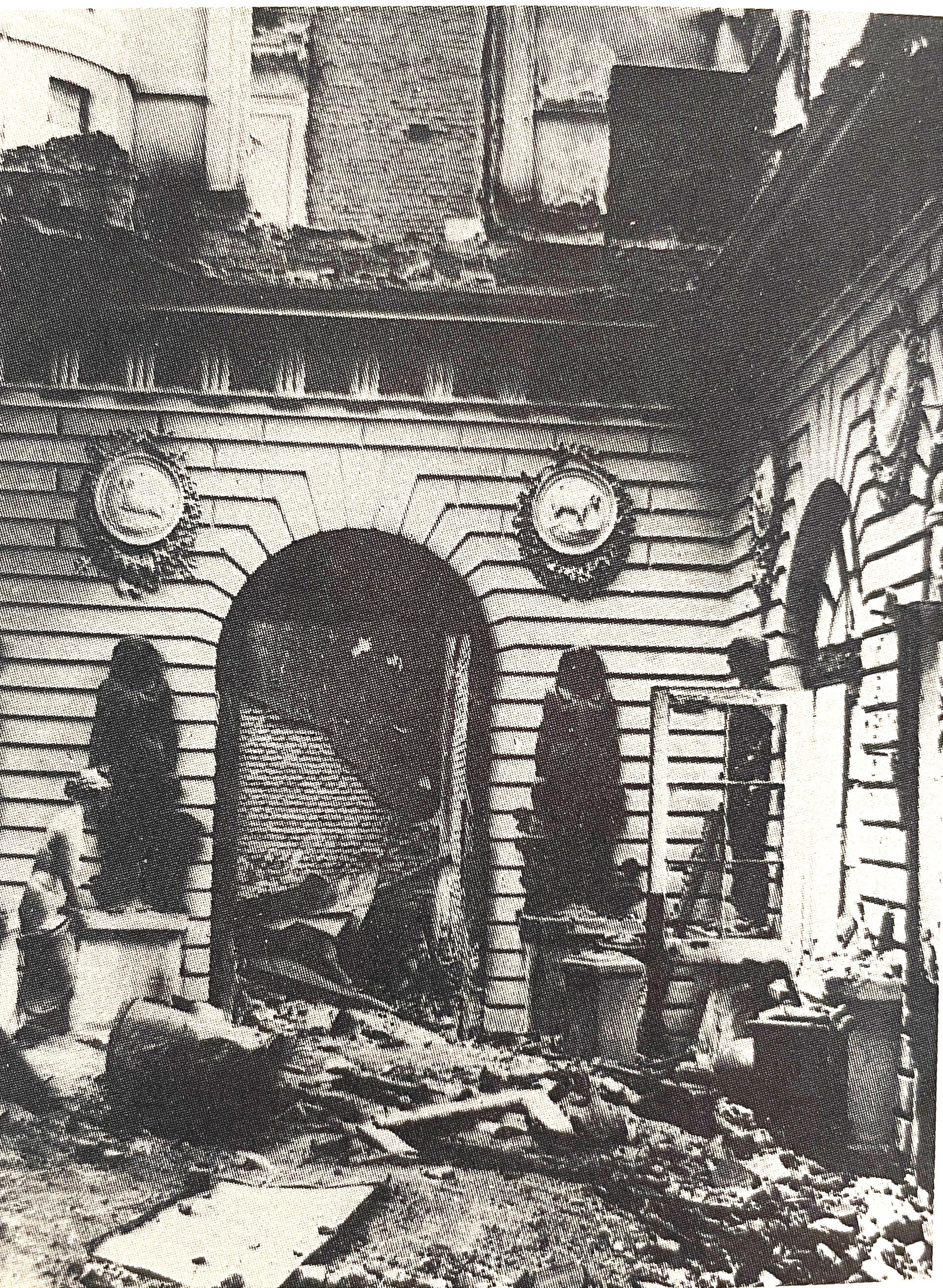
If this was evidence of the Gestapo’s occupation, their departure was marked by setting fire to the Palace of Pavlovsk. They also mined the building and the park.
Pavlovsk burned for ten days.
The Restoration
It is almost inconceivable that Pavlovsk even stands today, but it was entirely restored in the 1950’s and 60’s, with much of its original contents back in place - all despite the scale of the undertaking, the limited resources, and the race against time that saw to the removal of the artworks. Most of Anna Ivanovna’s concealment strategies worked with the majority of treasures avoiding discovery. Photos survive from 1944 showing the floor of the Egyptian Vestibule being lifted to exhume the buried sculpture.
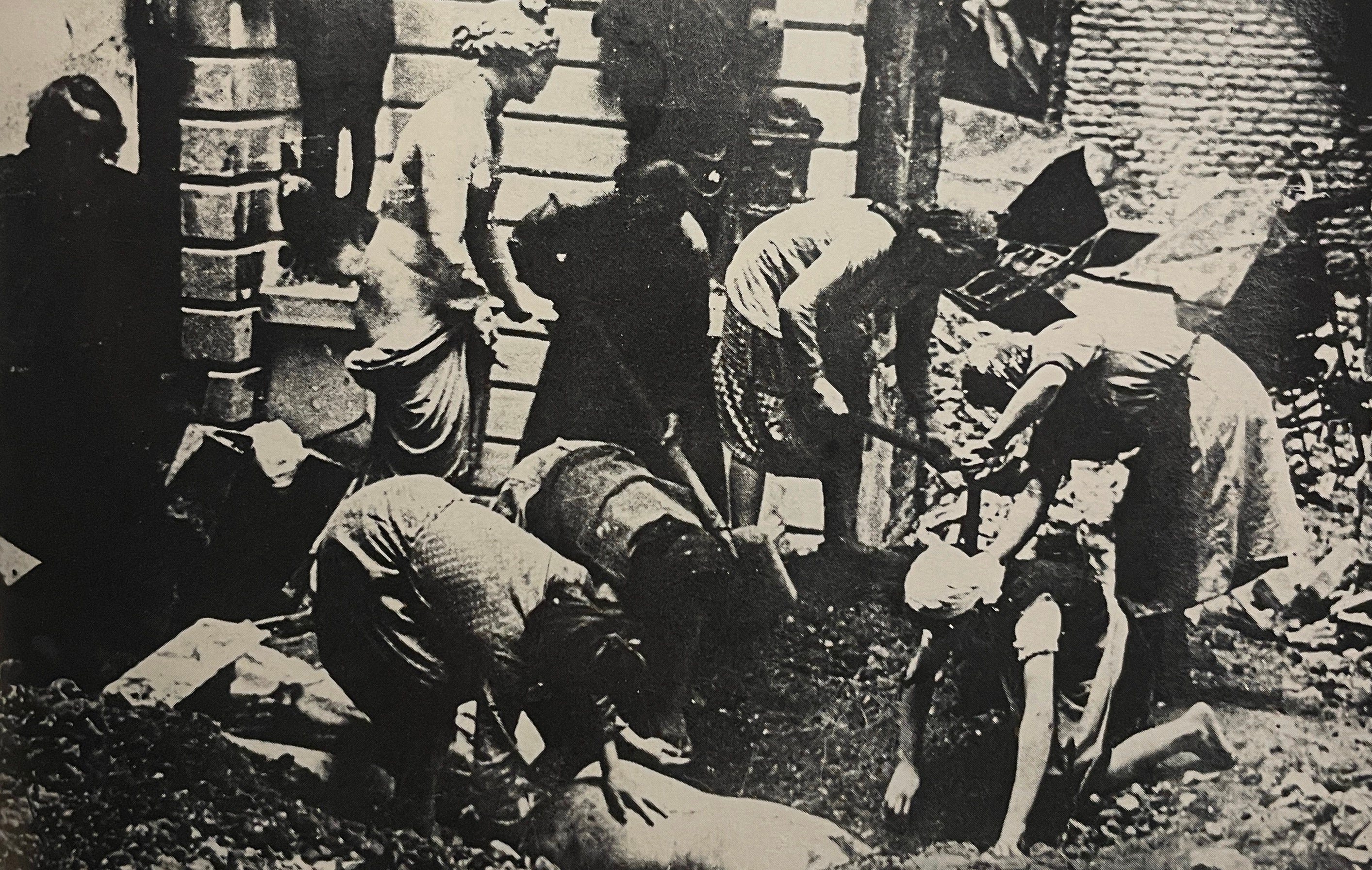
In the background can be seen the resilient Prokofiev Egyptian statues - they had survived, despite everything, and despite not being extracted or hidden. Being plaster they were both too big and too fragile to move, and, in a marble lined hall were not subjected to the worst of the fire. They remained and were restored and had moulds made of them in the 1980’s.
At the shop:
By the time we had manoeuvred ten of these bronzes into position in the shop we were exhausted. The plan had been to make pedestals for them to raise them to the height they were presented at in The Palace of Pavlovsk. But with the photocopier pumping out the brochure, each posted out to likely candidates, we quickly landed a sale. A well known New York interior designer bought the lot - the statues were heaved back out to the loading bay and off they went again. They were to line a vestibule in Manhattan. I don’t know if they are still there today.