The Bell: it's turned up.
How the spelling of a difficult name lead to the discovery of the mis-spelling of my name.

It’s turned up. The bell.
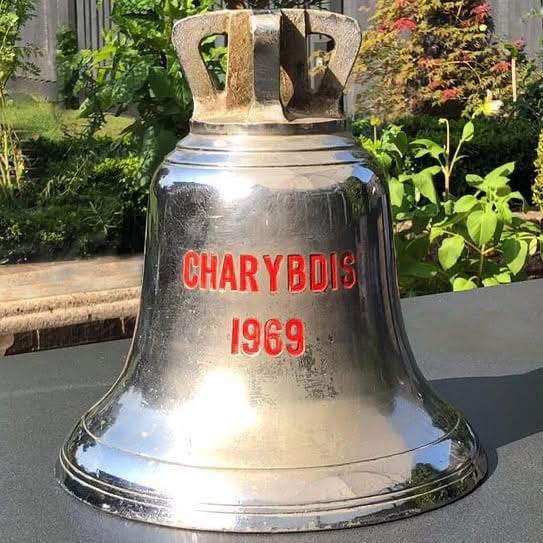
After a big coincidence, and some persistence from my sister Nicky, we now know who has got it; we’ve got photos too. It’s not that I’ve been obsessively searching for it – I haven’t. But I have delved from time to time: surely someone, somewhere must have it. And it’s got my name on it.
Nicky stumbled across the bell by chance during a business deal: the person at the other end was about to spell the name of their company to her for invoicing purposes, but Nicky interjected, “No, I know how to spell “Charybdis” because, funnily enough, my father served on a ship called HMS Charybdis”. “Hah,” they said, “our company is called Charybdis1 after that very ship: my boss’s Dad served on Charybdis too – in fact we’ve got the ship’s bell here”. “No way,” says Nicky, “my brother has his name engraved on that bell – he was christened in it”. (So too, it transpired, was the boss.)
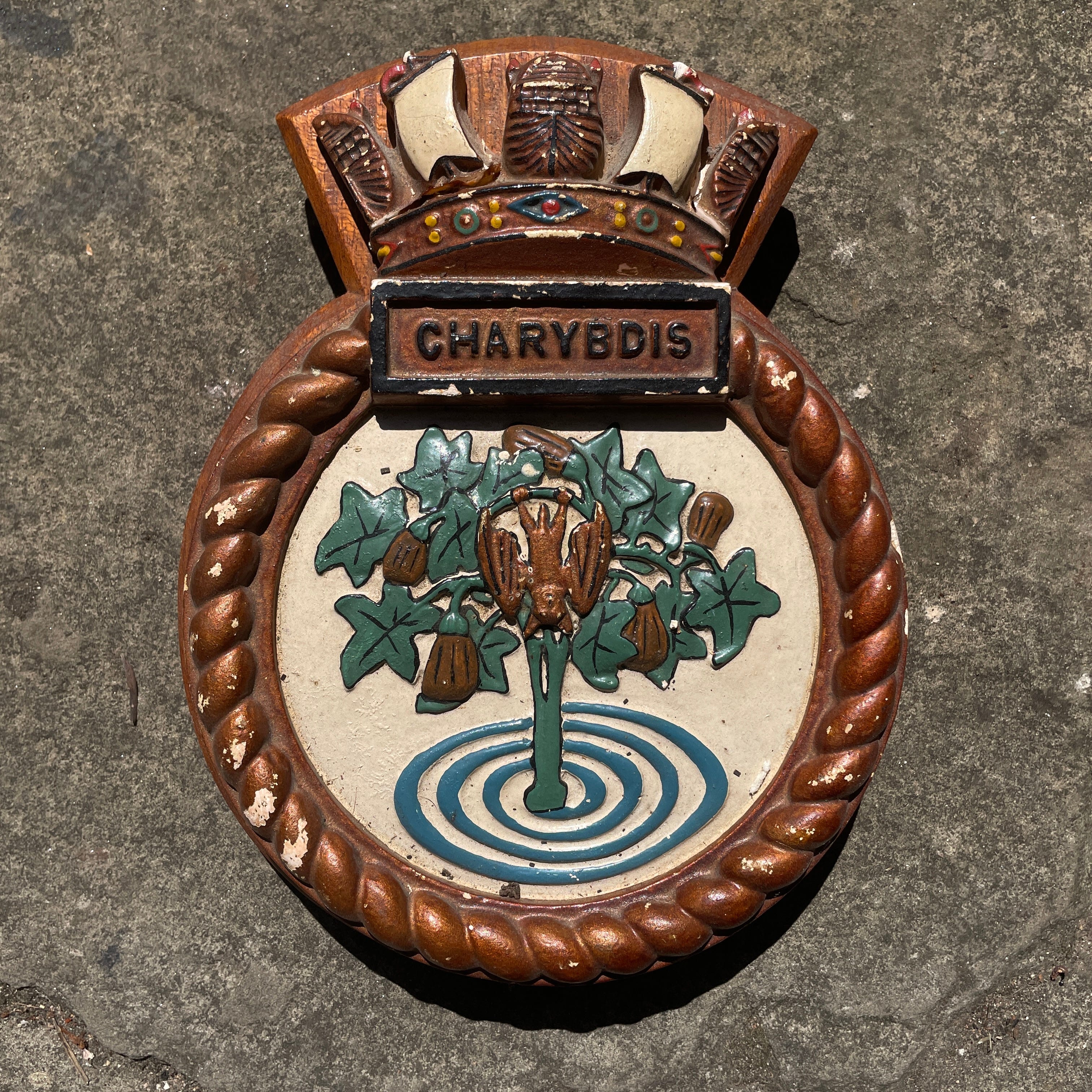
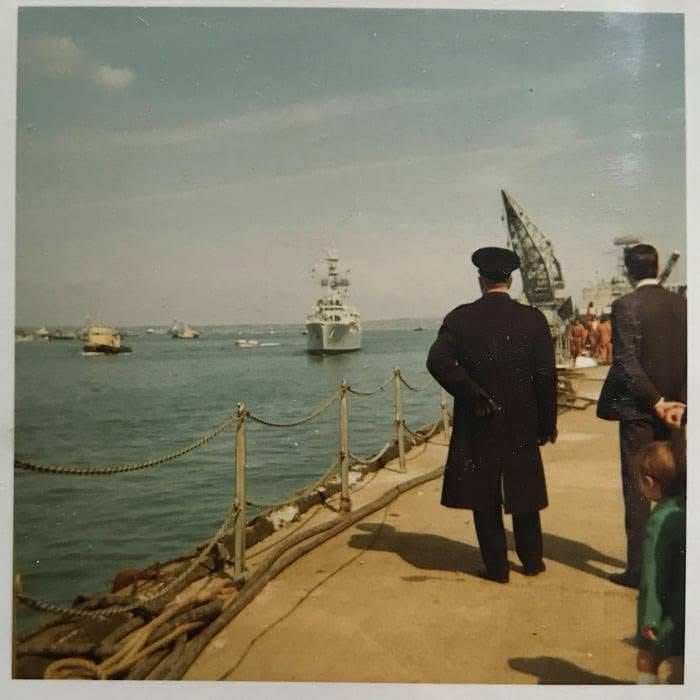
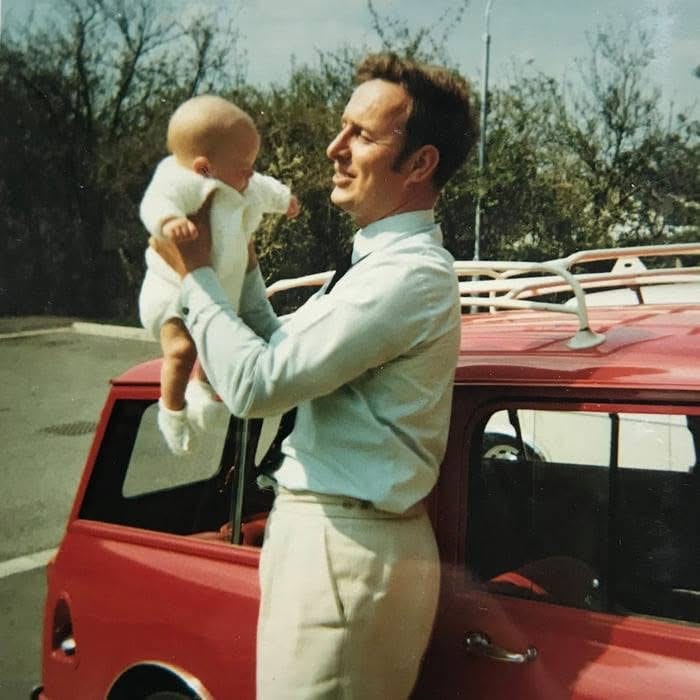
HMS Charybdis (F75) was built in Belfast and commissioned for the Royal Navy in 1969 when the bell was duly cast. Young Lieutenant Commander Ben Reeve, my late father, was in the first crew to serve on her and embarked on the Leander Class frigate’s first big “flying the flag” tour of 1970 - a mammoth round-the-world odyssey that took a year. That tour incorporated exercises off New Zealand and visits to numerous Pacific islands. By the time the ship returned to Portsmouth in April 1971, his son (me), born in his absence, was nearly three months old.
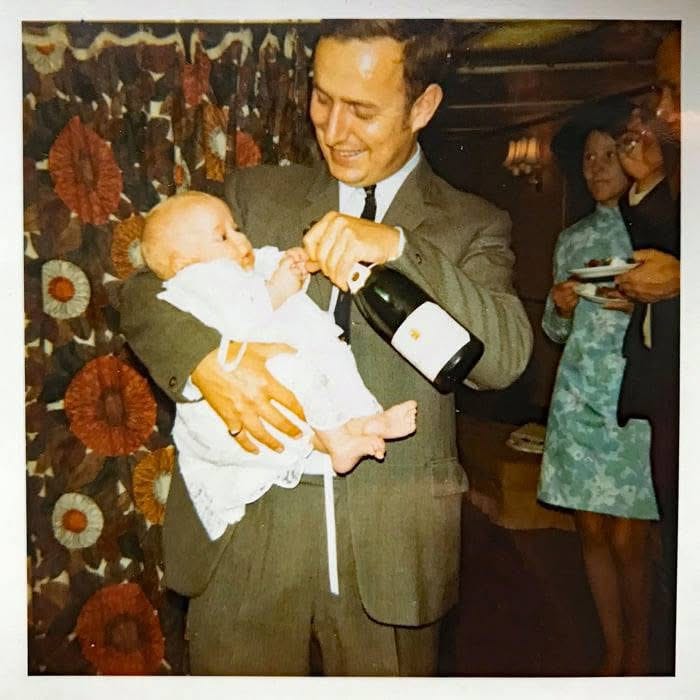
Permission was sought from the Commanding Officer for the infant Reeve to be Christened on board. Royal Navy tradition - for 200years - has it that the all-important Ship’s Bell is up-turned and used for a font on such occasions, and that the child’s name is then engraved on the bell for posterity. It was held in May, an informal service on board with families, in the wardroom, not in uniform. After such a long time away, it must have been a lovely get-together. Champagne was served.
Shortly afterwards Lt. Cdr. Ben Reeve was off again - appointed to another ship (HMS Fife I think). He never got to see his son’s name engraved, but later did seem sure that it had been carried out – it was, after all, the first christening held on board the young ship, the first name on the bell.
Thereafter, HMS Charybdis certainly did some nautical miles: the Second Cod War off Iceland, lots of work in the Mediterranean as guard to Gibraltar, post-Falklands patrols (by which time her revolving gun turrets had been replaced with Exocet missile launchers), Armilla patrol in the Indian Ocean, the Pacific again, the Gulf War.
Ultimately, she met an ignominious end. On 11th June 1993, the very week I, aged 22, finished my finals at Manchester University, “Cherry B” (F75) stripped and crew-less, floating off the coast of Benbecula in the Outer Hebrides was strafed, torpedoed and shot to pieces with missiles. The Admiralty had sentenced her to a dramatic end as the focus of target practice. Archive film records a fearful blaze on board after the onslaught that afternoon. She slipped beneath the waves and spiralled to the briny depths. (Back in Manchester, my basement flat also succumbed to a watery fate that day – knee-deep due to a freak flood. I had to abandoned it.)
The Charybdis bell, removed prior to the Benbecula sinking, and by then bearing a number of other baptismal names, survived. After Nicky’s persistence, photos came through. It’s in Kent, safe in the hands of another (who was christened on board in 1975) and sure enough one of the names on there does indeed ring a bell.
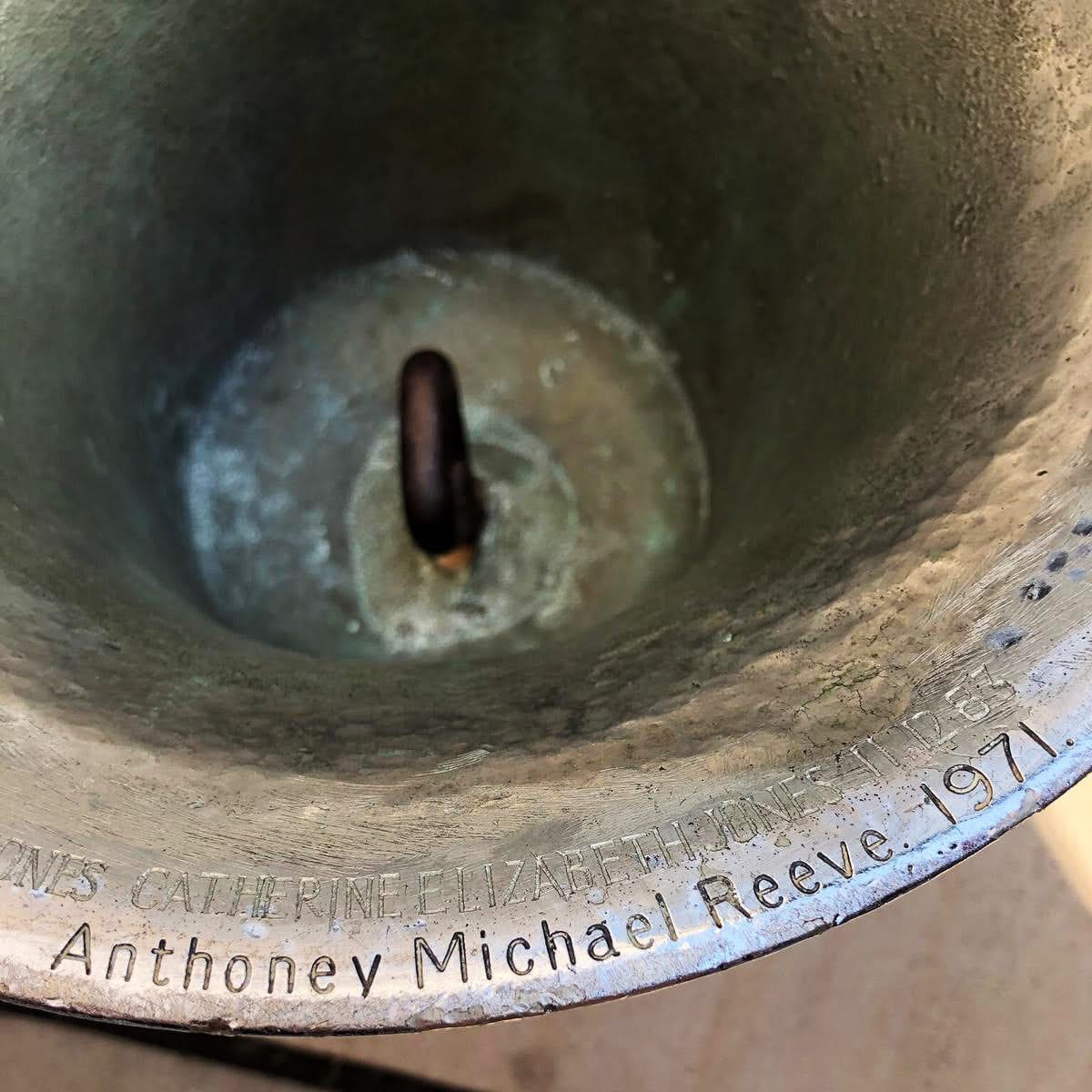
But, it transpires that whoever incised the letters of my name in 1971 couldn’t spell for toffee – or had had too much rum. I imagine, having realised their error (I’ve never seen my name spelt “Anthoney” before) and knowing that Lt Cdr Reeve had transferred to another ship, they must have reckoned that no one would ever notice…
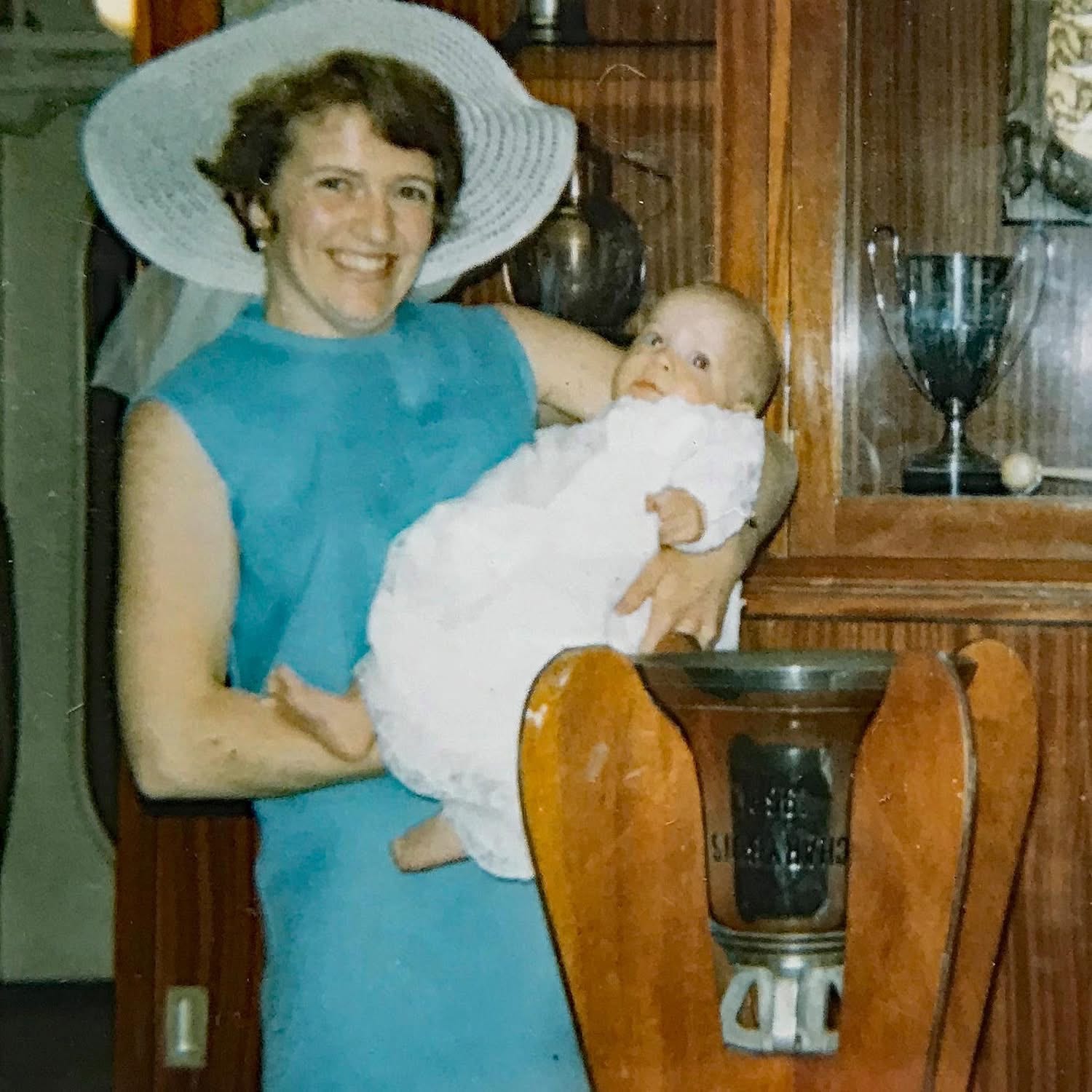
Recently, at my Mum’s house, I dug out photos of the Christening - 55years ago. And I had never spotted that the bell, in a specially-made oak cradle for when purposed as a font, is clearly visible in one of the pictures. The bell – it’s turned up.
For those who have just returned from seeing “The Odyssey” at the cinema - Christopher Nolan’s cinematic telling of Homer’s epic - you will have seen the Charybdis whirlpool. Our hero and his crew risk everything to avoid being sucked into it. They suffer the consequences of then sailing too close to Scylla - a six headed monster with an appetite for Greek sailors. (HMS Scylla, by the way, was the sister ship to HMS Charybdis).
Nolan doesn’t have time to delve into the origins of Charybdis the sea monster, but they involve the feud between Zeus and Poseidon that underwrites Odysseus’ travails. Charybdis was a daughter of Poseidon - a Naiad. She was responsible for aiding Poseidon to create a great flood for which Zeus punished her - transforming her into a monster living beneath a rock on the sea bed in the straights of Messina. She was sentenced to a life of sucking in vast quantities of seawater three times a day and spewing it out: creating a vast whirlpool and wrecking ships.
Nolan also cut Odysseus’ later encounter with Charybdis. Once he has escaped from the clutches of Calypso on his raft, Homer tells how his raft gets sucked into the whirlpool - he survives by grabbing hold of an overhanging fig tree and hanging upside-down - “like a bat” - until his raft is spewed out.