VICTORIAN BOXWOOD MOULDS
Tons of carved Victorian framemakers' moulds - a chance acquisition in a Warehouse clearance.

What is all this stuff?
I was pushing it time-wise. There was a certain logic to complete a road-trip out-West, beyond Bristol, by incorporating, on the way back, the collecting of several lots of ironwork that Tom had speculatively bought in an online auction in Theale in Berkshire. Several phone calls had ensued with the auctioneer, as my schedule unravelled, but they seemed to be quite relaxed as my “ETA” got pushed back to 4.30pm on that cold December evening.
A desolate industrial estate was hard to navigate in the driving rain and security lights. I reversed the van into a gloomy gateway shrouded with skips, and lorries. The roller shutter whirred upwards, the halogen light within poured onto the concrete yard and revealed the angled downpour was now laced with sleet.
A lone Malcolm within, the auctioneer, was a long-suffering character surrounded with a warehouse of chaos. The warehouse was racked to the eaves with jumbled boxes of the bizarre, the eclectic and, it transpired, the significant.
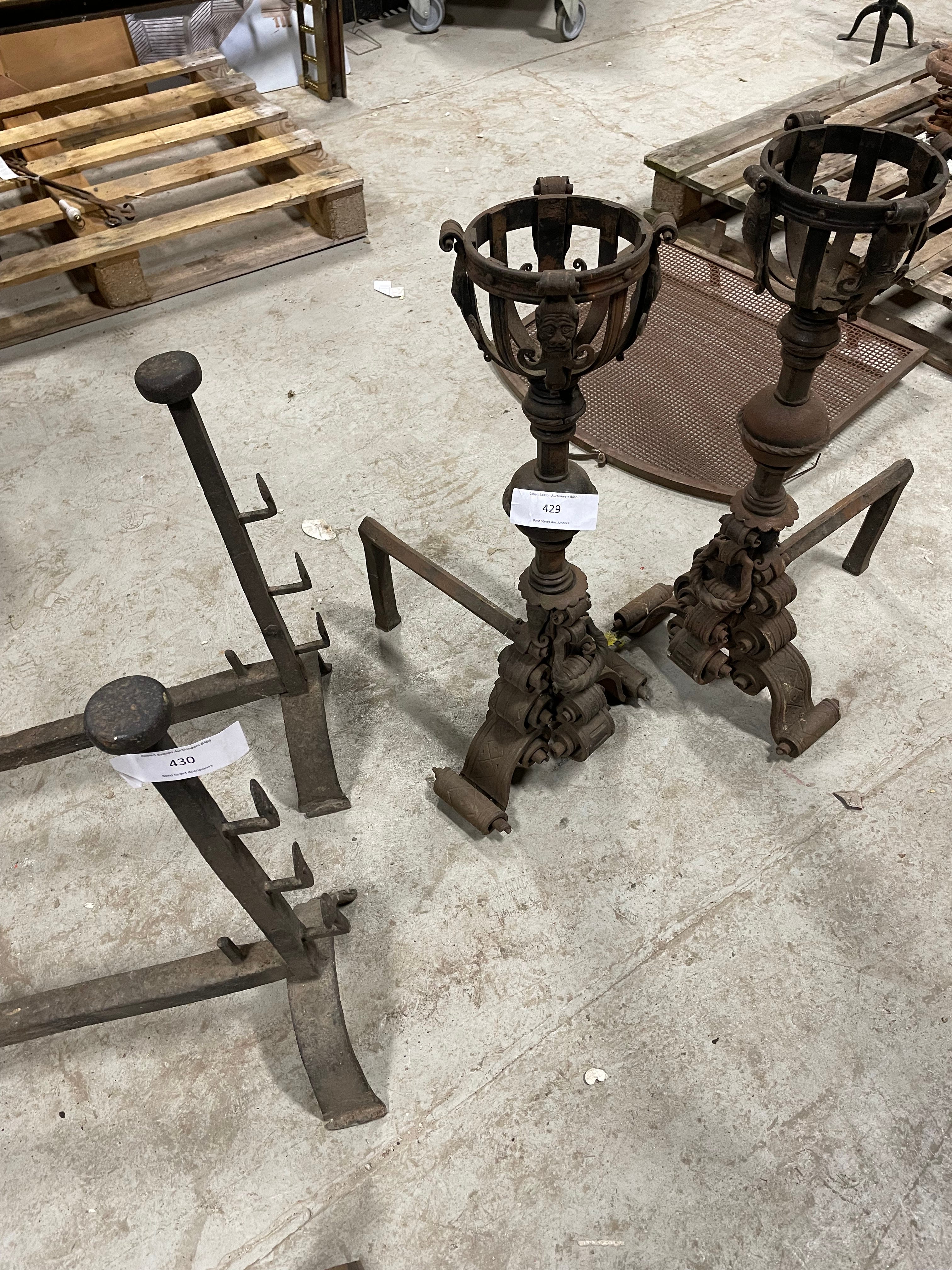
I concentrated on rounding up our purchases: as usual it was heavy ironwork; Tom had done well with his online bidding. We brought together piles of our rusted fire-irons, fire grates and firebacks onto pallets and ventured into the pouring rain to load them into the van with a temperamental forklift. I went back inside the warehouse.
“But what is all this stuff?”
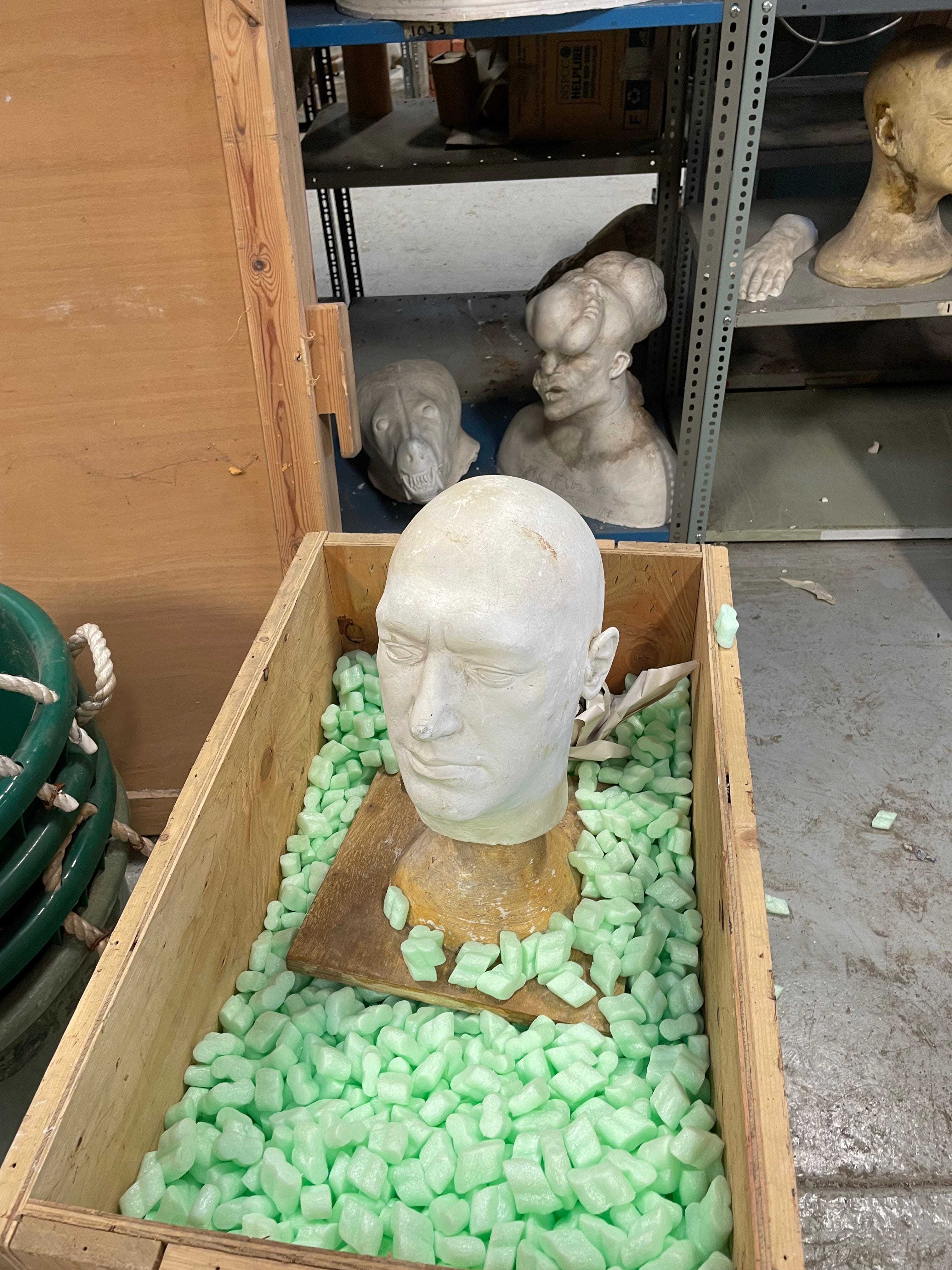
There were cast-aside fibre-glass limbs and bits of aliens poking out of boxes, grimacing masks, architraves, mirrors, moulds and machines. Trolleys, screens and skips filled the alleyways. Boxes were stacked on warehouse shelves to the ceiling. Malcolm gave a guarded explanation that he had bought the contract to dispose of the contents of the warehouse. And it had to be cleared fast. Malcolm largely worked alone despite the magnitude of the task at hand.
The fire irons were just a few lots in an initial online auction to get things moving. There was more of the fireplace stuff and we did a deal to save Malcolm the trouble of having to catalogue more for his next online sale.
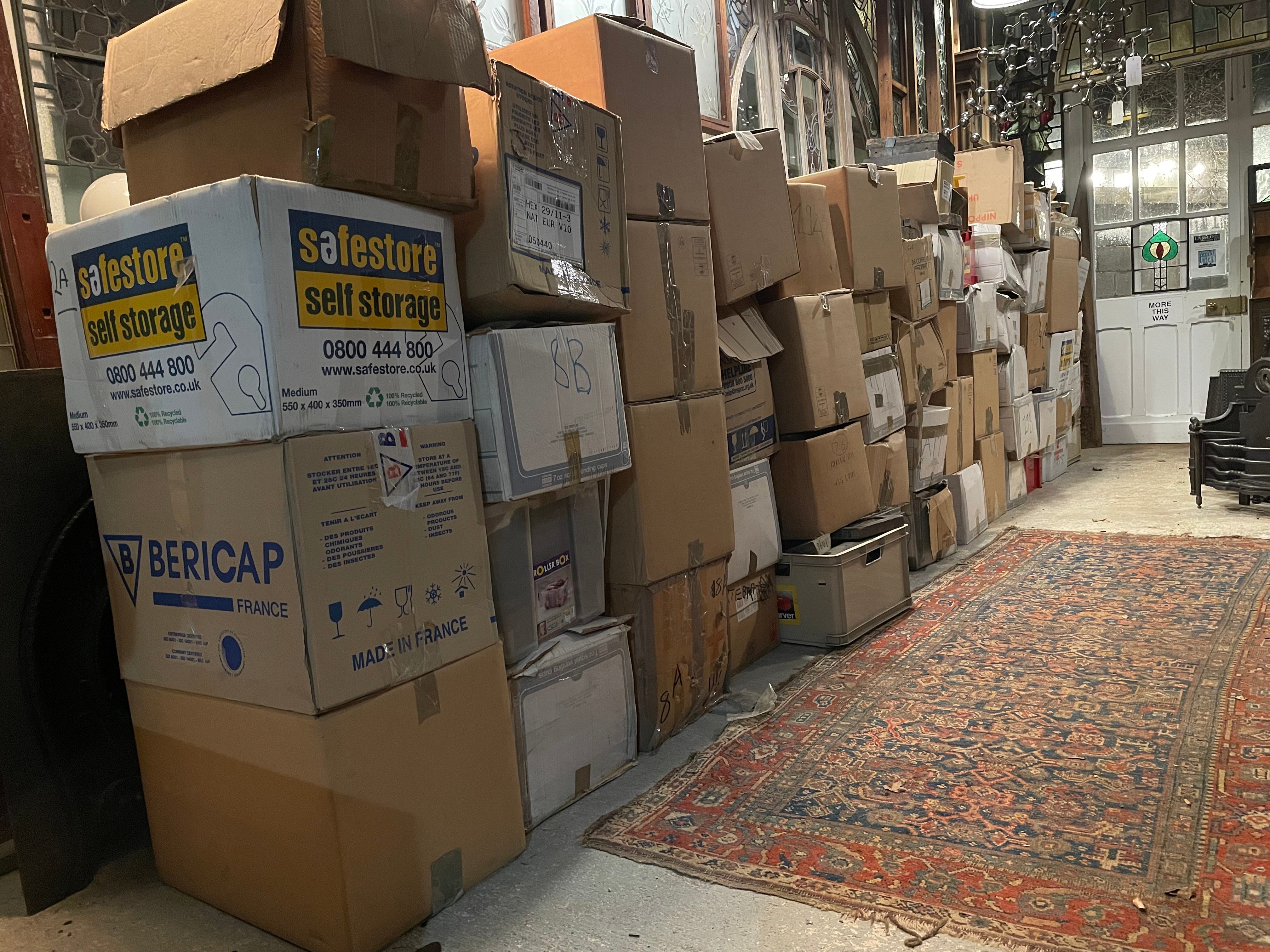
I wandered further through the warehouse. Two aisles were stacked high with rows of cardboard boxes and I peeked inside a few of them. They were rammed with Victorian carved boxwood frame-makers moulds. The more I looked the more I realised the scale of how many there were: thousands of them.
“What on earth is going to happen to these?”.
“I’m loading them next week onto an artic’ truck going to Hull”.
“Why? What’s in Hull?”,
“My mate up there is going to stick them through one of his auctions”.
“Right, OK, but what if I made you an offer so you don’t need to send them to Hull - you just sell them to me?”,
“Well the truck is booked now”,
“I’ll pay for the cost of the truck and save you having to load it all”,
“I’ll need to talk to my mate”.
Over the next few minutes we came up with a ball-park value and a plan. Malcolm was going to talk to his mate in Hull. I ran to the van in the darkness as the gale whipped through the industrial estate. I ventured home with the windscreen wipers on full.
It was only a week before Christmas when I returned the next day, now in the 7.5t crane lorry. The problem was that I was on my own - my colleagues had booked holiday. We hadn’t been expecting a big clearance this close to Christmas but Malcolm was on a tight schedule. It all had to go.
Carved Boxwood Framemakers’ Moulds
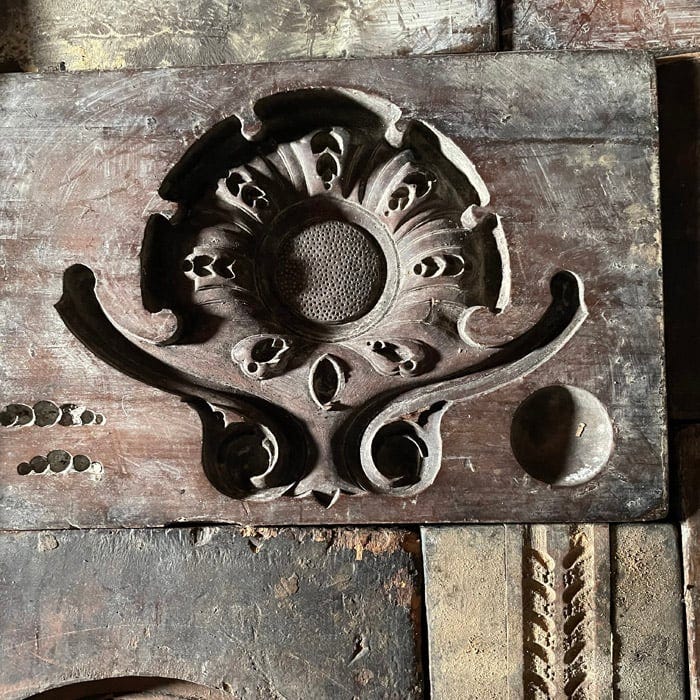
Boxwood frame-makers’ moulds are fabulous things. The moulds are carved from wood. Wood being inflexible, they are not for making casts in plaster (they’ve got “undercuts”, you’d never get a plaster cast to release from the mould in one piece). They are for casting in “Composition”.
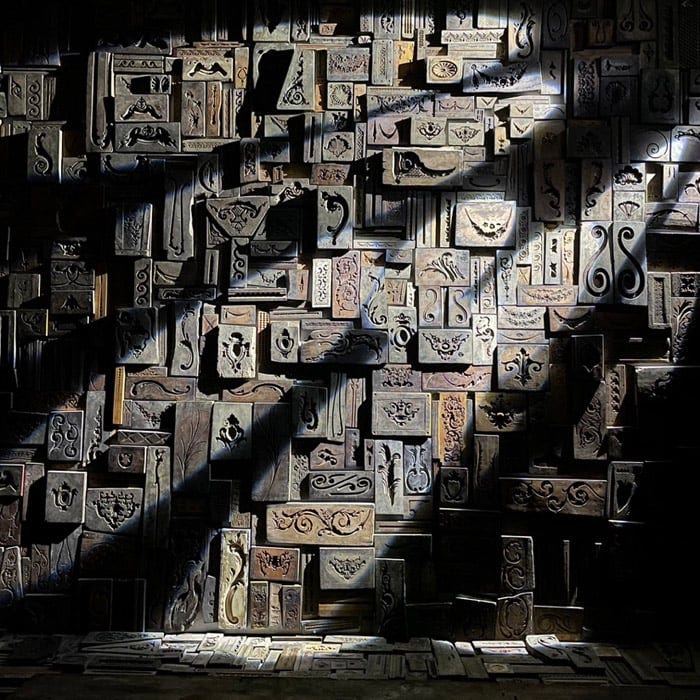
Often referred to as “compo”, composition is created using a heated mix of “whiting” (very fine casting plaster) blended with two-part animal glue. Once mixed, the composition – in a plasticine consistency – is forced into the carved wooden mould in a press. The resultant cast is eased from the mould whilst the composition is still pliant and is then stuck to a prepared blank picture frame with glue size. Crucially, the positive casting has the elasticity to retain the hollows and under-cuts of the negative mould as it is extracted. Once the form of the picture frame is complete, the composition is left to harden-off before being prepared with a gesso primer coat and a “bole” to which gold-leaf is applied. The result is a finely ornamented gilded picture frame – apparently carved.
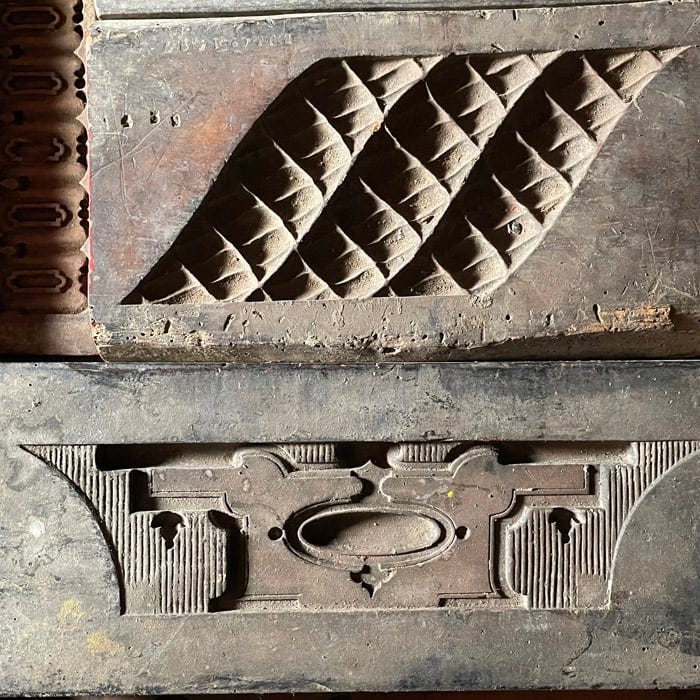
By these means framers of old could meet the demand for ornate gilded picture frames – identical ones in series if required. Each workshop would build a library of carved boxwood moulds. Whilst the Composition moulding process was comparatively quick, the skilled, and expensive, origination work of carving the ornament only needed doing once – in the negative. There’s only a select few workshops today that still know how to do all this.
Picture frames, mirror frames and internal architectural ornament were all embellished in this way. It became popular in the late 18th Century and was championed by Robert Adam amongst others – he used both composition and papier maché (or “Carton Pierre”) to create the ornamentation applied to fire surrounds, pilasters and overdoors.
Into the 19th Century the desire to hang paintings generally, and portraits in particular, saw the rise of the fashionable salons and an enormous demand for picture frames. The use of composition became the norm and the method allowed picture frames to become ever larger, more ornate and grandiose. In time the Royal Academy were banning pictures submitted to the Summer Exhibition that arrived in a frame deemed too exuberant – they were hogging too much wall-space.
A Victorian handbook extols the benefits of the technique:
“The composition ornament is exceedingly pliant and supple, and may be bent into almost any form without breaking or injuring it; it is this property which makes these ornaments so convenient; as they may be applied to the round, the flat, or the hollow parts of the frame, with almost equal ease.”
Jacob Simon in “The Art of the Picture Frame” notes that
“Compo came to be used very widely by gilders and framemakers but they depended on the superior skills of the carvers who cut the finely detailed boxwood moulds which were used for pressing the and producing the compo ornament”.
As I rummaged through the boxes it became clear that the moulds were from numerous Victorian workshops – a few of them stamped with makers’ names such as “John Baker & Co., Kensington” and “Veronese”, and some with the carver’s name “J. Newcombe” and ”M. Thompson”. Whilst many were carved in boxwood there were examples of a variety of timbers used – including various fruitwoods, cedar and a couple in lignum vitae – any off-cut of any tightly grained timber seems to have been utilised by the carvers.
And dense fruitwoods are heavy. Packed tightly into boxes, like Tetris blocks, made for a very heavy load. By accident I had just bought 160 boxes of them: it was going to be a few trips.
Christopher Tucker
Each time I shuttled back and forth from Theale to the shop (a 50 mile round trip) I gleaned hints from Malcolm about who had assembled this vast collection and why (he was though, I think, behind a NDA and I had to work much of it out for myself). It turns out I had come across the collector years previously.
Christopher Tucker (1941-2022) was in the film business. Originally an opera singer who had discovered his calling when he made his own prosthetic nose for one role, he went on to become the best in the business for prosthetic make-up and Monster Design in an age just before the dawn of Computer Generated Imagary (CGI) special effects.
He had worked in the make-up department for “Julius Caesar” (Dir. Stuart Burge, 1970 - working with the leads Charlton Heston and John Gielgud). The diverse inter-galactic aliens seen meeting in the “Cantina” bar in “Star Wars” (Dir. George Lucas, 1977) were Tucker’s creations. His was the extraordinary work for “Elephant Man” (Dir. David Lynch, 1980) – Tucker was brought in at the last minute to save the day; with a week to go, and no sleep, he delivered one of the most famous make-up transformations in film. The were-wolves in “The Company of Wolves” (Dir. Neil Jordan, 1984) were his. On stage Tucker produced the mask and make-up for “The Phantom of the Opera” for successive productions over many years. On TV his work was seen in various productions including “Dr. Who”.
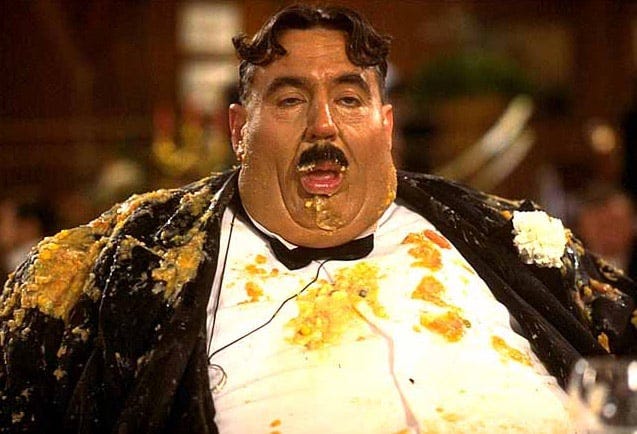
Tucker revelled in the gruesome: the famous Monty Python scene in “The Meaning of Life” (Dir. Terry Jones, 1983) with Mr Creosote – the glutton who is persuaded to ingest one more morsel by the waiter (John Cleese): “… just a tiny wafer thin mint” – pushed the envelope somewhat (Tucker manufactured the exploded Mr Creosote). So did the challenge to extend the manhood of a pornstar with a priapic prothesis. We’ll return to this.
Before LASSCO I worked at Bonhams in Lots Road. There was a specialist Frame Department there that held a few auctions each year and in each auction there was always a few boxes of framemakers’ moulds. Tucker spent years viewing the Picture Frame auctions at Bonhams and Christies (South Kensington) and elsewhere – his partner in tow. They would hone-in on the boxes of framer’s moulds and video each one as they unpacked the boxes. I remember them with the video camera. They would bid on these lots enthusiastically. Tucker would then put his workshop into action casting from them and re-moulding them in flexible silicone moulds (which does enable a plaster cast to be produced). This work would keep his workshops at “CTS” – Christopher Tucker Sculpture – in continuous production between the films.
Christopher Tucker died in 2022 – his obituary was published in The Times and The Guardian and elsewhere. His huge collection of props, casts and film memorabilia were stored at Theale and had changed hands: the warehouse lease had expired and it had to be cleared - that’s where Malcolm came in. The truly extraordinary collection of boxwood moulds, the result of many thousands of hours of intricate carving in Victorian workshops, and Christopher Tucker’s tenacious bidding, was in my truck: 160 boxes of it.
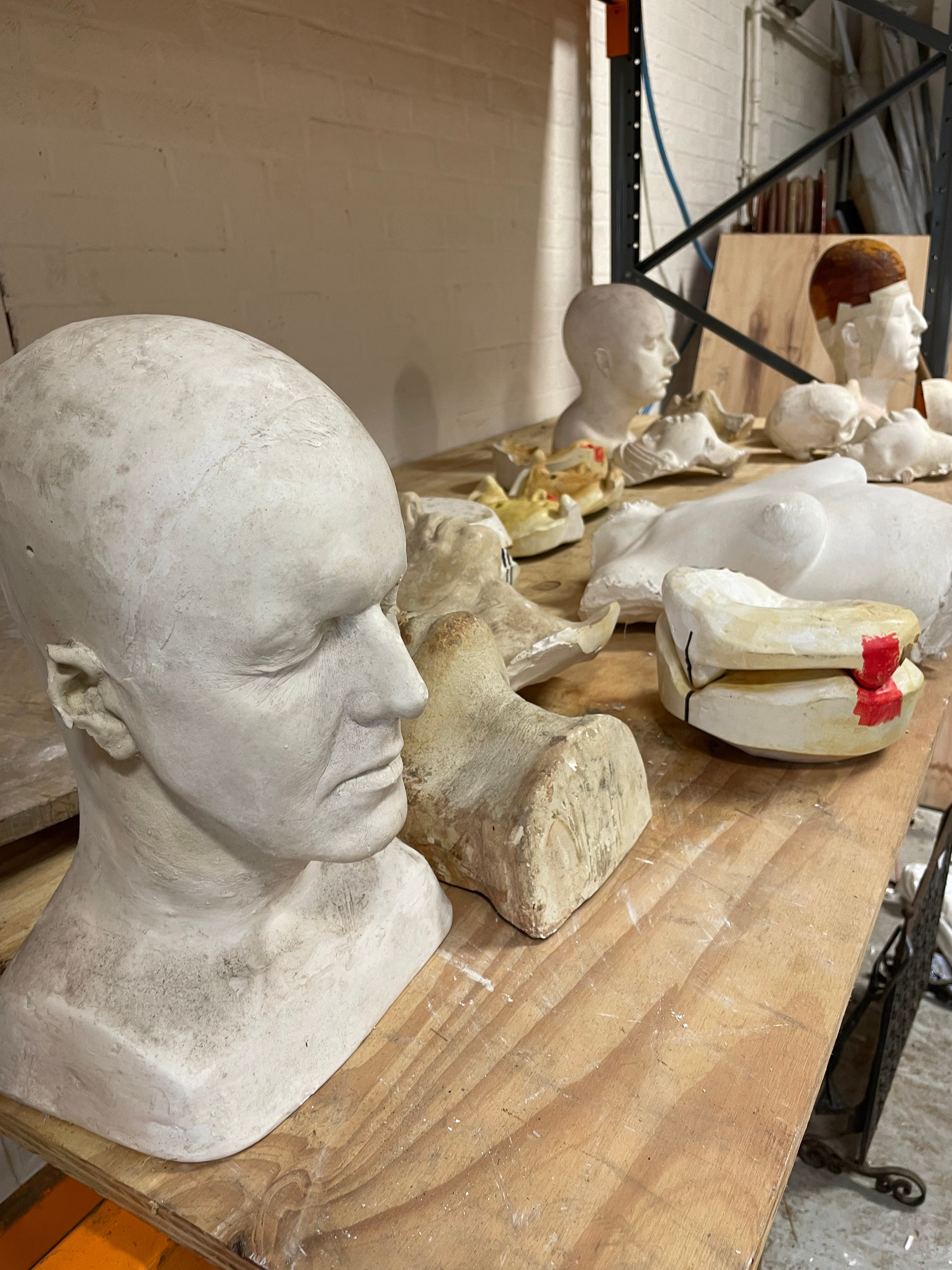
Malcolm let me look around the warehouse. I had to concentrate on the boxwood moulds but I did come away with some boxes of silicon moulds for architectural and frame ornament and other castings. I had to resist getting drawn in to buying the film memorabilia but there were amazing finds in every box. There were boxes of annotated film scores: Total Recall (a film that Tucker didn’t contribute to as far as I know), Company of Wolves etc. Life-masks of actors celebrated and forgotten (I still have the late Tony Slattery in a box under my desk), working parts of Daleks and Cyber-men. There were werewolf pelts and casts of various body-parts.
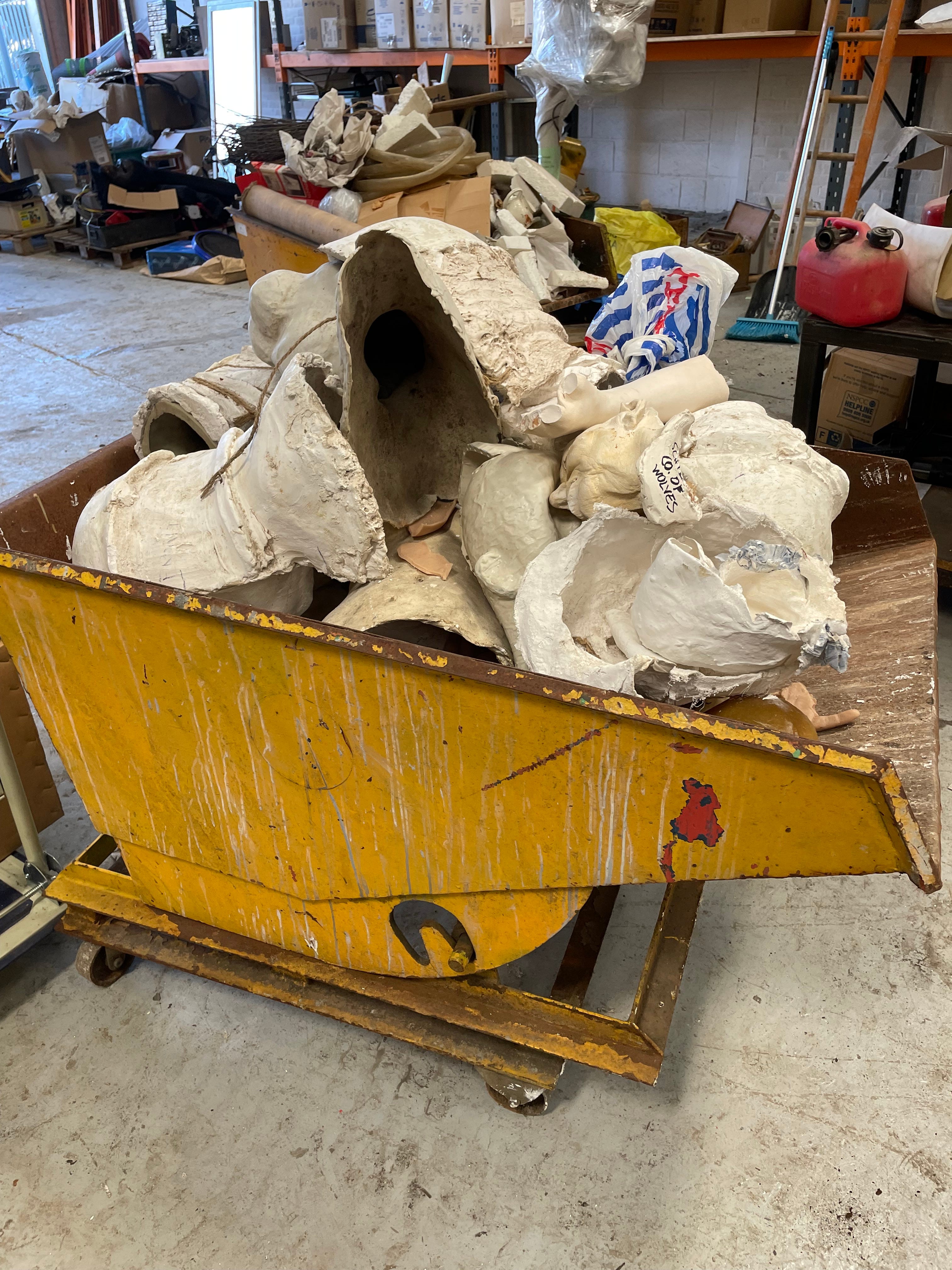
In fact there were whole skip-fulls of tangled moulds of body parts. There were some casts of parts of human actors in, how shall I put this, in the act of coitus. Malcolm deemed these unsellable and sent them off for landfill (they may be a shock for someone at the tip one day). They were extremely rude but nevertheless did serve as testament to Tucker’s technical ability in the moulding workshop. The mind boggles. But this is how I have come into the possession of both the mould, and a couple of casts, of the erect penis of pornstar Daniel Arthur Mead b.1960 (aka “Long Dong Silver”). It is now in a sealed box in a LASSCO store-cupboard marked “X-Rated”. It is impressive technically (how on earth was the mould made?), and dare I say it, it is impressive in scale too. But I’m not sure I know what to do with it.
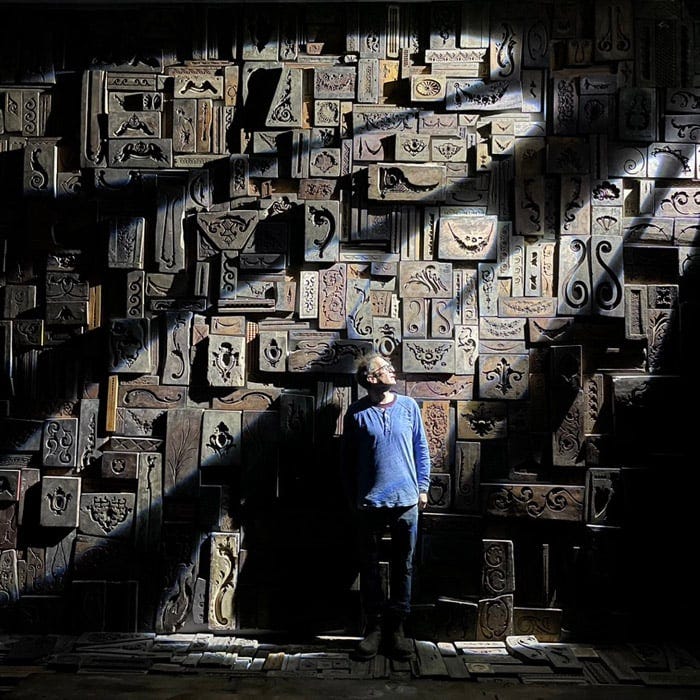
Back from Christmas I cleared our largest gallery wall, bought a bigger ladder, and set to work hanging as many of the boxwood moulds as possible - packing them in. I returned to it when I could, and after a month, the wall was full. The resultant photos were spotted by The World of Interiors who did a feature about it (here).
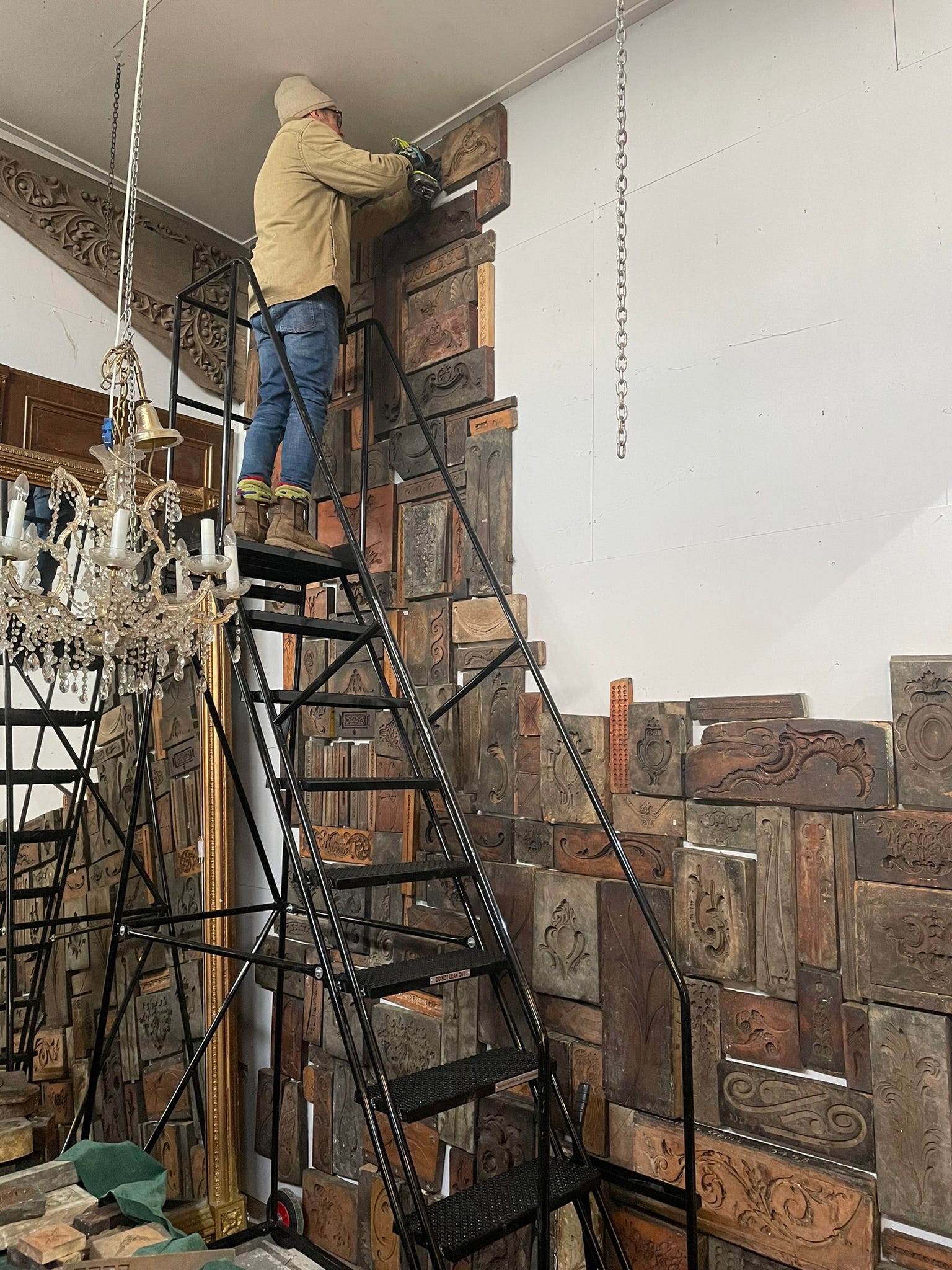
Two buyers came forward. One, the owner of a Country House in Dorset, wanted to emulate the wall I had just hung - and bought the majority of them. The other was a frame maker in Wales - I ensured that he had as many as he could get, in order to build on his own mould library and continue to use this valuable resource - truly heartwarming to see the moulds being used for their original purpose. I got back on my ladder, brought down the display-wall and packed them all up again.
I think these are my favourite deals - there’s been a few - huge quantities of unlikely but brilliantly crafted objects of a type. In time the story behind those others, the sound-boards of the Jupiter Organ, the Stead and Simpson shoe-lasts, the Dalle-de-Verre blanks from Paddy’s Wigwam, and more, will be told in these pages.
What an amazing story! I love your appreciation for these crafts, and that you share your knowledge. It’s very special that at least some of the moulds will be used for their original purpose. ❤️